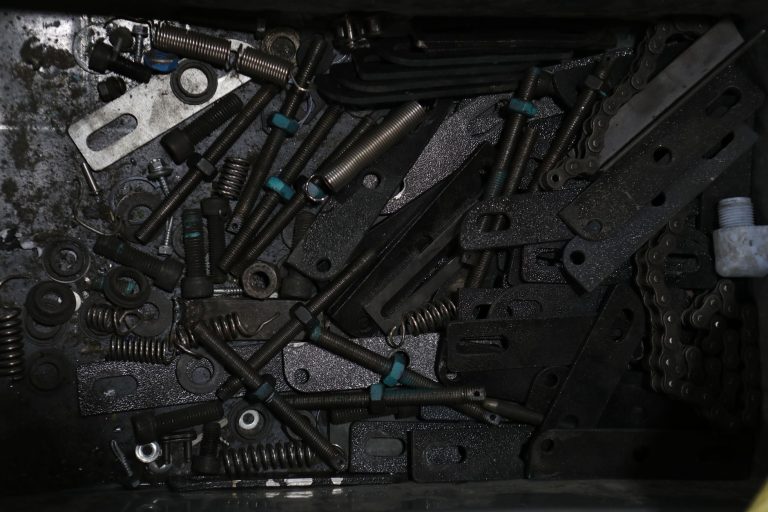
Industrial Springs: Selection, Specification, and Application Guide 2026
Industrial springs are precision-engineered mechanical components designed to store and release energy to maintain force, tension, or position within machinery and structural assemblies. These components must be specified based on rigorous calculations of load, deflection, material fatigue, and operating temperature to ensure system reliability.
⚡ In a Rush? Key Takeaways
- Industrial springs require fatigue limit verification for cycles exceeding 50,000 operations.
- Material selection should account for temperature extremes up to 80°C in standard setups.
- High-cycle environments necessitate the use of shot-peened surface treatments to boost lifespan.
- Always consult the Gas Spring Force Calculator for critical assist applications.
- The verdict is to prioritize cycle-rated components over standard stock for all production machinery.
How Are Industrial Springs Classified by Function?
Industrial springs are categorized by their mechanical movement, specifically compression, extension, torsion, and constant force designs.
What Defines an Industrial Compression Spring?
Compression springs are open-coil helical units that offer resistance to axial compressive loads to maintain space or provide force.
These springs are the most common industrial variant, used in everything from valve actuators to heavy-duty industrial dampers. Specification relies on calculating the spring rate, measured in Newtons per millimeter (N/mm).
- Solid height limits must be calculated to prevent coil binding.
- Standard carbon steel is suitable for dry, room-temperature indoor environments.
- Stainless steel variants are required for outdoor or corrosive wash-down areas.
Where Are Industrial Extension Springs Used?
Extension springs use hooked ends to provide resistance to pulling forces, typically found in tensioning or counterbalancing.
Unlike compression types, these springs store energy by attempting to return to their original, tightly-wound state. The design of the end fitting, such as a full loop or side hook, often dictates the failure point in high-load industrial applications.
What Parameters Drive Industrial Spring Specification?
Engineers must specify springs based on total load capacity, deflection distance, operating frequency, and environmental factors.
How Do I Calculate Spring Fatigue Limits?
Fatigue limits are calculated by determining the stress range versus the cycle count before material yield occurs in the coil.
Every spring has a finite life. For high-cycle applications, I always recommend looking at industrial machinery specs to ensure the spring rate won’t cause premature failure due to cyclic loading.
| Cycle Requirement | Recommended Treatment |
|---|---|
| < 10,000 | Standard untreated steel |
| 10,000-100,000 | Pre-stressed/Set removal |
| > 100,000 | Shot-peened finish |
Why Does Temperature Affect Spring Force?
Extreme operating temperatures alter the modulus of elasticity, causing significant force drops in metallic coil spring components.
When working with specialist gas springs or heavy metallic coils in agricultural machinery, remember that high heat reduces the material’s structural stiffness. Always oversize your force requirement if your machinery operates above 60°C consistently.
What End Types Are Available for Industrial Springs?
Spring end configurations affect load distribution, installation ease, and resistance to settling or buckling.
Common end types include closed and ground ends, open ends, threaded ends, and various hook or loop designs for extension springs. Closed and ground ends provide a flat, perpendicular surface that ensures even load transfer and reduces buckling, making them ideal for compression springs in precision machinery.
Open ends are simpler and cheaper but may require additional support to prevent buckling under load. Threaded ends allow for adjustable preload or easy integration with adjusting nuts, while specialized hooks (e.g., machine hooks, crossover hooks) on extension springs influence the stress concentration and fatigue life.
Considerations for Spring Alignment and Buckling
High-ratio springs are prone to buckling when compressed, potentially leading to contact with housings or shafts.
When the free length of a compression spring exceeds four times its mean coil diameter, the risk of buckling increases significantly. To mitigate this in industrial assemblies, engineers should implement either an internal guide rod or an external sleeve (pocket) to constrain the spring path. Failing to align the spring axis correctly can lead to lateral forces that cause unpredictable mechanical interference and uneven wear on associated moving parts.
What Are the Common Industrial Spring Failure Modes?
Spring failure typically manifests as permanent deformation, coil fracture due to fatigue, or oxidation-induced surface pitting.
How Does Environmental Corrosion Impact Spring Life?
Corrosion creates stress risers on the wire surface, which drastically reduces the fatigue life and leads to sudden brittle failure.
In marine or outdoor industrial settings, surface protection is non-negotiable. If you are using springs in a high-salt environment, opt for 316-grade stainless steel to ensure the structural integrity of your assembly over time.
What Is the Impact of Coil Binding?
Coil binding occurs when a spring is compressed to its solid height, causing extreme stress that results in permanent deformation.
To avoid this, ensure your design includes at least 15% clearance from the spring’s solid height at full compression. Exceeding this limit will cause the spring to fail to return to its free length, effectively ruining the calibration of your entire mechanical system.
Are There Frequently Asked Questions About Industrial Springs?
-
Can I swap a mechanical spring for a gas spring?
Mechanical springs provide linear force while gas springs offer non-linear curves, meaning direct swaps require careful redesign.
-
How do I verify the spring rate of an unknown component?
Verify the rate by measuring the force required to compress the spring by a known distance using a calibrated load test stand.
-
Is it necessary to replace springs in pairs?
Yes, replacing springs in pairs ensures balanced force distribution and prevents uneven wear on the associated mechanical linkages.
Common concerns include material compatibility, spring rate validation, and the transition from mechanical to gas-powered springs.