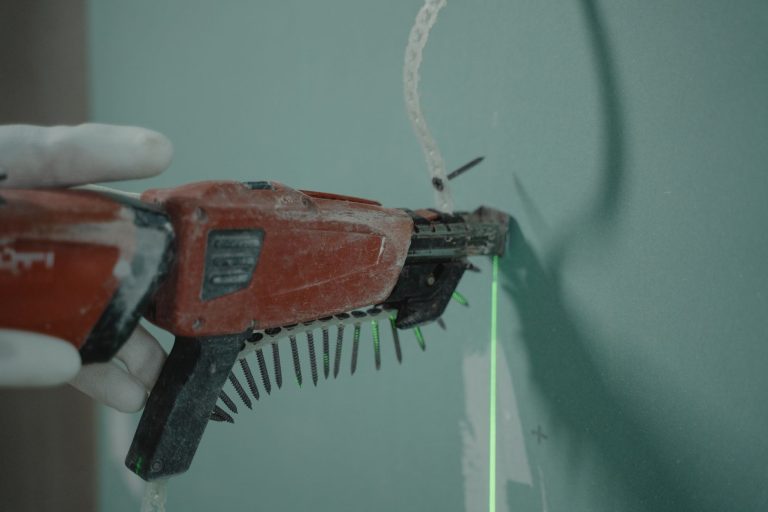
Mechanical Components: A Guide to Selection for Industrial and Automotive Use 2026
Mechanical components are the foundational building blocks of industrial and automotive assemblies, encompassing fasteners, bearings, linkages, and actuation hardware such as gas springs. Effective specification requires balancing physical load requirements with environmental factors like corrosion, temperature, and cycle life constraints to prevent system failure.
⚡ In a Rush? Key Takeaways
- Standard industrial gas springs require evaluation every 20,000 to 100,000 cycles for fatigue.
- Stainless steel 316 grade should be specified for any environment with over 5% saline exposure.
- Correct sizing of gas struts accounts for a 1.5% force drop per 1°C decrease in temperature.
- Always specify fasteners by grade and fatigue rating rather than solely by diameter and thread pitch.
What Criteria Define High-Quality Mechanical Components?
High-quality mechanical components demonstrate tight dimensional tolerances, material consistency, and verifiable cycle-life data for OEM standards.
How Do Material Specifications Affect Performance?
Material choice determines a component’s strength-to-weight ratio, corrosion resistance, and thermal expansion properties in extreme conditions.
Engineers must distinguish between carbon steel, stainless variants, and industrial-grade polymers. For example, using zinc-plated steel in a marine setting will result in failure within months due to oxidative stress.
Instead, prioritize 316-grade stainless steel for exposure to salt spray or chemical processing. Choosing the correct marine gas springs ensures that internal seals remain isolated from the environment.
Why Does Dimensional Tolerance Matter for Assembly?
Precise dimensional tolerances ensure interchangeability, reduce vibration-induced wear, and maintain load distribution across all fasteners.
Components manufactured to ISO 2768-m standards provide the baseline for industrial reliability. When tolerances are loose, force distribution becomes uneven, accelerating wear on pivot points and bearing surfaces.
- Standard Machining: ±0.1mm tolerance
- Precision Machining: ±0.01mm tolerance
- High-Volume Stamping: ±0.2mm tolerance
How Do Surface Treatments and Coatings Affect Component Longevity?
Appropriate surface treatments improve corrosion resistance, wear resistance, and fatigue life, extending service intervals in harsh environments.
Common treatments include zinc nickel plating for corrosion protection, nitriding for surface hardness, and PTFE coatings for low-friction interfaces. Selecting a treatment must consider the base material, operating temperature, and exposure to chemicals or salt spray.
For example, a nitrided bearing surface can withstand higher loads before spalling, while a black oxide finish on fasteners provides mild corrosion resistance without affecting dimensional tolerances.
How Should You Select Actuation Hardware?
Actuation hardware selection depends on the force curve, stroke range, and ambient temperature of the application’s operating environment.
How Do You Calculate Force Requirements for Gas Springs?
Force requirements are derived from the lid or panel weight, the distance from the pivot, and the desired assist level in the design.
Engineers often rely on an accurate gas spring force calculator to determine the precise Newton rating required. Simply guessing leads to premature seal failure or an inability to hold a panel in the open position.
What Are the Limitations of Standardized Gas Struts?
Standard gas struts are optimized for room temperature and moderate cycle frequencies, failing in extreme cold or high-speed operations.
Operating a standard strut in a freezer or an outdoor winter environment without a low-temp charge results in significant pressure loss. Always verify the temperature range stated on the datasheet before installation.
Considerations for Integration and Mounting Geometry
Proper mounting geometry ensures that mechanical components operate within their intended kinematic range, preventing side-loading and binding.
When integrating components like gas springs or linkages, the orientation relative to the center of gravity is paramount. If a mounting point is incorrectly positioned, the actuator may experience non-linear forces, leading to erratic performance. Engineers must perform a kinematic analysis to ensure that the component remains in a neutral, non-binding state throughout the entire travel arc. Misalignment is a silent killer for hardware; even a minor deviation of a few degrees can force the internal rod of a gas spring against the guide bushing, causing severe friction, rapid seal wear, and inevitable leakage.
Furthermore, consider the end-fitting selection. Ball-and-socket joints are preferred for applications where the path of travel is not perfectly planar, as they accommodate slight angular misalignments. In contrast, rigid eyelet mounts provide high-integrity load transfer for strictly linear motion. Choosing the wrong end-fitting for the movement profile is one of the most common oversights in assembly design, often leading to sheared threads or cracked mounting brackets before the product even reaches the end-user.
How Do You Diagnose Component Failure Modes?
Component failures are diagnosed by inspecting wear patterns, corrosion levels, and fatigue signs relative to expected cycle lifespan.
What Causes Premature Failure in Moving Hardware?
Excessive loading, improper lubrication, and environmental contamination are the leading causes of premature mechanical component failure.
For moving parts, friction is the enemy. If your car boot gas strut is not holding up, the issue often stems from seal degradation rather than the rod itself.
How Can Maintenance Schedules Extend Component Life?
Preventative maintenance schedules should include regular lubrication, torque checks, and visual inspection of seals and end fittings.
| Component | Check Interval | Action |
|---|---|---|
| Gas Struts | Annual | Check for drift |
| Fasteners | Bi-annual | Torque verification |
| Bearings | Quarterly | Lubrication |
What Are the Frequently Asked Questions About Mechanical Components?
-
Are Aftermarket Mechanical Components Reliable?
Aftermarket components are highly reliable if they meet original equipment manufacturer specifications and undergo rigorous batch testing.
-
Can I Replace Industrial Components with Consumer Hardware?
Consumer hardware typically lacks the material fatigue ratings and tolerance levels required for consistent industrial application use.
-
Do Gas Springs Require Periodic Recharging?
Gas springs are sealed units that cannot be recharged and must be replaced as a complete assembly when internal pressure drops below specs.
Common queries focus on interchangeability, lifespan in varied environments, and the importance of using certified industrial-grade hardware.