Locking Gas Springs Guide: Selection and Engineering Specs 2026
How Do Locking Gas Springs Function in Industrial Systems?
Locking gas springs use an integrated release valve within the piston rod to halt fluid flow, effectively locking the stroke at any desired position.
Unlike standard gas struts that provide constant extension force, a locking gas spring features a release pin. When depressed, this pin opens a valve allowing gas to flow between chambers, permitting movement. When the pin is released, the valve closes, trapping the nitrogen in its current state and creating a rigid lock.
Engineers specify these for medical tables, height-adjustable workstations, and heavy machinery covers where variable positioning is critical for safety. In high-load scenarios, ensure the release mechanism is properly integrated with your actuation system to prevent premature wear.
- Rigid locking: Prevents movement in both compression and extension directions.
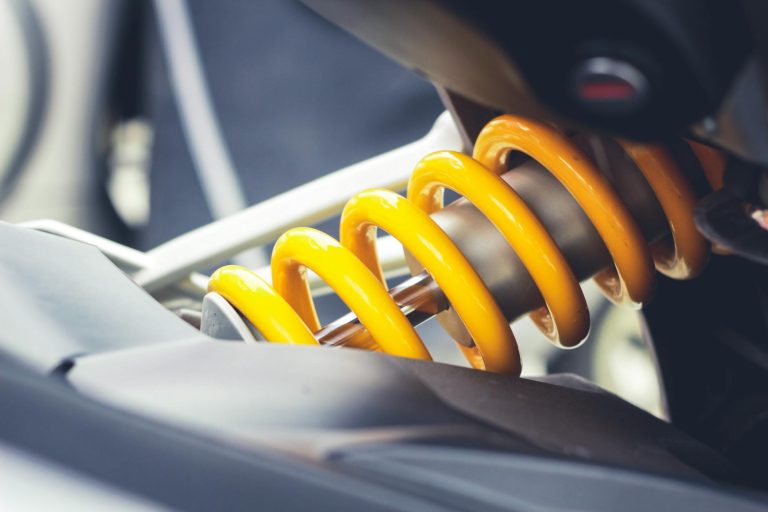
- Elastic locking: Provides a cushioned, springy hold similar to a vehicle suspension.
- Actuation: Requires a cable, lever, or button system to engage the release pin.
- Cycle life: Standard industrial units reach 50,000 cycles with proper maintenance.
What Is the Difference Between Rigid and Elastic Locking?
Rigid locking prevents any movement in either direction once locked, whereas elastic locking allows for slight deflection under heavy loading.
Rigid locking is the industry standard for precision applications like monitor arms or surgical light positioning. It uses a separator piston to ensure no compressibility exists on either side of the main piston during the locked phase.
Elastic locking uses the natural compressibility of nitrogen gas, resulting in a soft, spring-like feel. I specify this primarily for driver seats or equipment that requires shock absorption while remaining locked in a specific setting.
How Is the Actuation System Specified for Locking Struts?
Actuation is achieved via a release pin at the rod end, which must be triggered by a compatible bowden cable, rigid rod, or manual lever.
Correct actuation design is the most common point of failure I encounter in prototype machines. The pin requires a specific minimum travel, typically 1.0mm to 2.5mm, to fully open the valve; failing to provide this travel results in a weak lock.
You must also ensure that the release cable or lever does not apply side-load to the pin. Side-loading will bind the valve and prevent the gas spring from locking reliably or, conversely, prevent it from unlocking.
How Do I Calculate Force Requirements for Locking Applications?
Force calculation for locking springs must account for the static load, the dynamic load during adjustment, and the required locking safety factor.
When selecting your Newton force, you must first determine if you need ‘force assist’ or simply ‘position hold’. A force-assist spring is designed to make a heavy weight feel lighter during the adjustment phase, which differs from a purely holding strut.
Use our Gas Spring Force Calculator to verify your mounting geometry before ordering. Improper mounting angles often lead to excessive force at the lock point, which can cause internal seal blowouts.
How Does Temperature Impact Locking Performance?
Nitrogen pressure fluctuates by approximately 0.3% per degree Celsius, requiring temperature-compensated force specifications for outdoor use.
If your application operates in a cold warehouse or an outdoor environment, the pressure loss can affect the locking stability. Standard seals perform optimally between -20°C and +80°C, but extreme cold may make the locking response feel sluggish due to hydraulic oil viscosity.
Always specify the operating temperature range when ordering from a supplier. For precision medical or food-production environments, ensure the oil used is compliant with machine guard safety and hygiene standards.
Why Do Locking Struts Fail in High-Cycle Use?
Failure in high-cycle use is typically caused by internal seal degradation or pin-actuator misalignment, leading to gas pressure loss.
I see many engineers overlook the seal-on-rod friction in locking units compared to standard struts. Because the valve is inside the rod, the tolerances are much tighter, and dust or debris ingress is catastrophic for the internal valve.
Frequently Asked Questions About Locking Gas Springs
-
Can a locking gas spring be recharged if force is lost?
Locking gas springs are permanently sealed units and cannot be recharged; they must be replaced entirely if nitrogen pressure is lost.
-
Does a locking spring require a specific mounting orientation?
Most locking springs must be mounted with the rod end pointing downward to ensure the internal seal stays lubricated by the oil.
-
How much force is required to actuate the release pin?
The release pin typically requires between 20N and 50N of force to actuate, depending on the internal pressure of the specific unit.
-
Are there maintenance requirements for the actuation cable?
Cables require periodic lubrication to prevent friction and binding, which are the primary causes of erratic locking performance.
For bespoke or bulk order configurations, contact our industrial team to discuss your specific load profile and cycle requirements. Proper agricultural and industrial machine struts require careful consultation to ensure long-term reliability.