Industrial Springs Guide: Types, Selection and Applications
What are the main types of industrial springs used in industrial applications?
Industrial springs include compression, extension, torsion and gas springs, each serving distinct force application roles in machinery and equipment.
Compression springs resist compressive forces and are found in valve assemblies, presses and suspension systems. Extension springs resist tensile forces and appear in farm equipment, garage doors and tensioning devices. Torsion springs resist rotational forces and are common in hinges, counterbalances and lever mechanisms. Gas springs use compressed nitrogen gas to provide controlled force for lifting, lowering and positioning applications such as access hatches, machine guards and adjustable workstations.
What are compression springs and where are they used in industry?
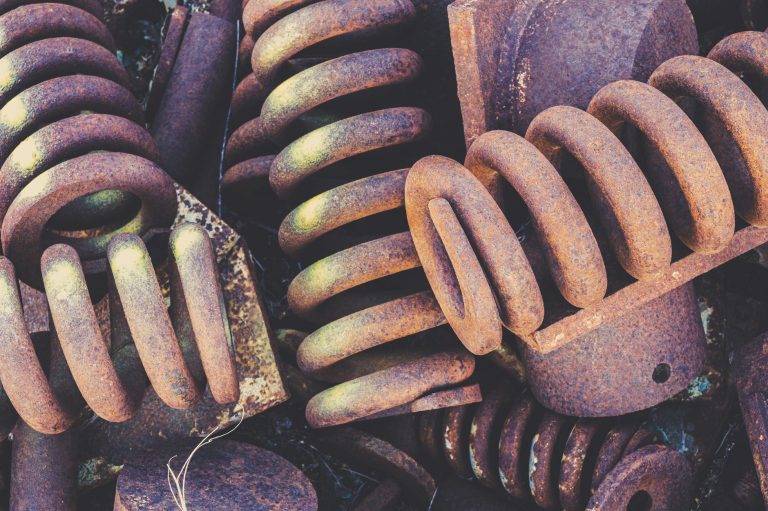
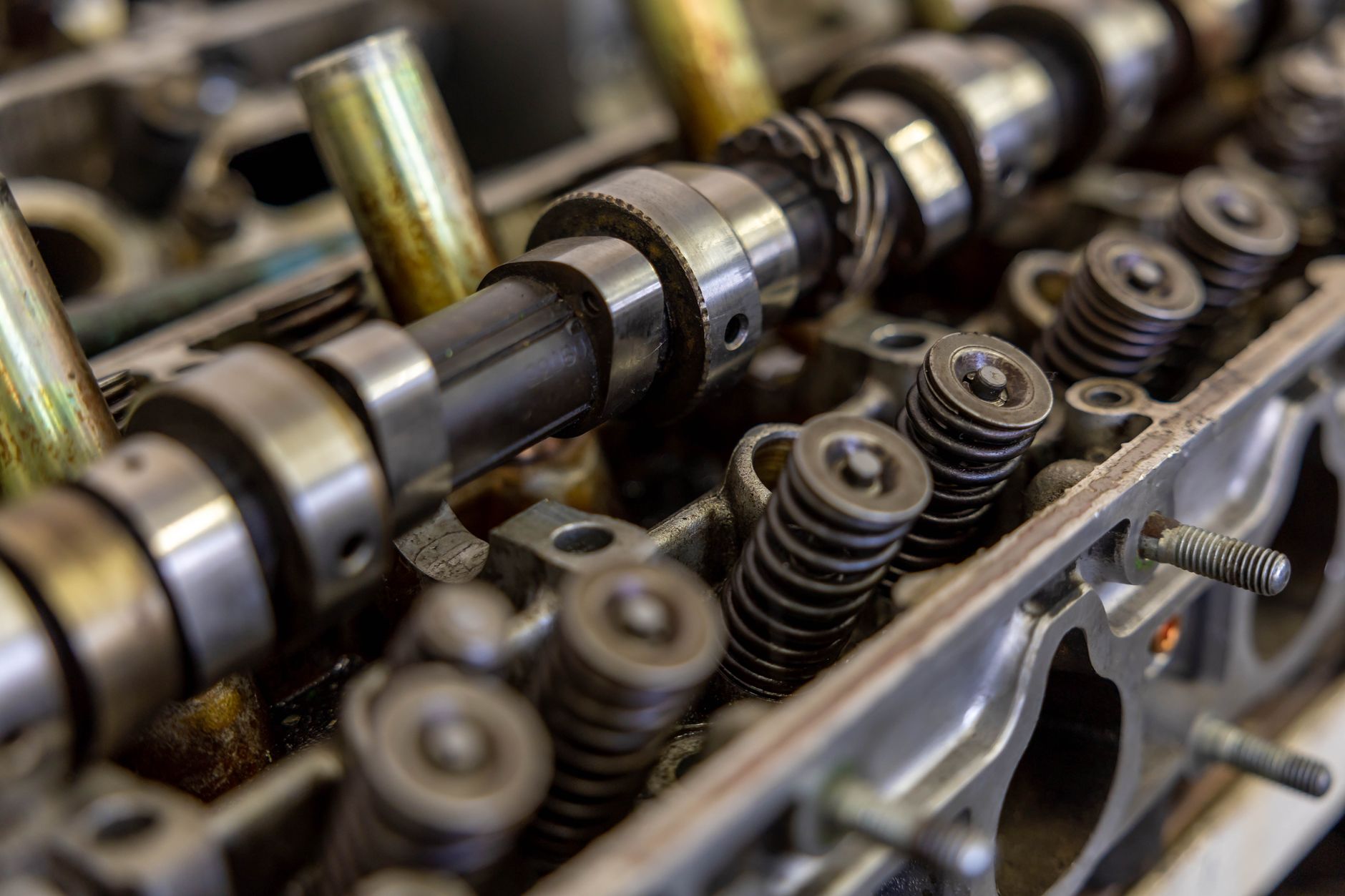
Compression springs absorb compressive loads and are used in valves, clutches, brakes and suspension systems across manufacturing and heavy equipment.
These helical springs store energy when compressed and release it when the load decreases. Typical industrial applications include valve return mechanisms in hydraulic systems, clutch pressure plates in transmissions and vibration isolators in machinery mounts. Material choice depends on environment: music wire for dry indoor applications, stainless steel for corrosive environments and chrome silicon for high-stress applications.
What are extension springs and where are they used in industry?
Extension springs resist tensile loads and are used in farm machinery, garage doors, tensioning devices and agricultural equipment.
These springs extend under load and return to original length when force is removed. Common uses include tensioning belts on conveyor systems, counterbalancing weights in lifting equipment and providing return force in mechanical switches. End configurations vary from full loops to hooks and specialized eyes depending on attachment requirements.
What are torsion springs and where are they used in industry?
Torsion springs resist rotational forces and are found in hinges, counterbalances, levers and control mechanisms in industrial machinery.
These springs exert torque when twisted and return to neutral position when released. Applications include counterbalancing heavy lids on industrial enclosures, providing return torque in valve actuators and supplying force in electrical switch mechanisms. Wire diameter and coil diameter directly affect torque rate and must be calculated based on application leverage.
What are gas springs and where are they used in industry?
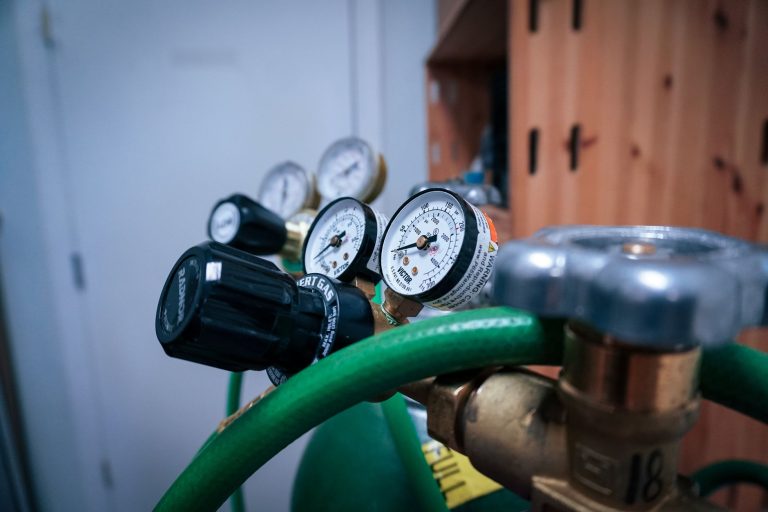
Gas springs use compressed nitrogen gas to provide controlled force for lifting, lowering and positioning in access hatches, machine guards and ergonomic workstations.
Unlike mechanical springs, gas springs provide near-constant force throughout their stroke. I’ve specified them for decades on access hatches where consistent force prevents sudden closure hazards. Typical industrial uses include machine tool enclosures, food processing equipment guards and adjustable height workstations. Stainless steel construction is essential for corrosive environments like marine or chemical processing.
How do you select the right industrial spring for your application?
Spring selection requires calculating required force, stroke, environmental factors and end configurations based on application geometry and load conditions.
The process begins with force calculation based on load and leverage, followed by stroke determination from movement requirements. Environmental factors like temperature, corrosion and contamination dictate material and finish selection. End fittings must match mounting provisions to prevent premature failure.
What factors determine the force requirements for an industrial spring?
Force requirements depend on applied load, lever arm distance, spring position and number of springs sharing the load in the application.
Calculate force using F = (Load × Distance) / (Spring Distance × Number of Springs). For example, a 50kg lid with centre of gravity 200mm from hinge, supported by two springs 100mm from hinge requires 500N total force (250N per spring). Always verify centre of gravity position – I’ve seen specifications fail because engineers assumed centre of gravity at midpoint when it was actually 70% toward the handle.
How do you calculate the required force for a compression spring?
Compression spring force equals spring rate multiplied by deflection, with rate determined by wire diameter, coil diameter and active coils using the formula G×d⁴/(8×D³×N).
Where G is modulus of rigidity (79.3 GPa for music wire), d is wire diameter, D is mean coil diameter and N is active coils. For a 10mm wire diameter, 50mm mean diameter and 10 active coils, rate is approximately 79.3×10⁹×0.01⁴/(8×0.05³×10) = 79.3 N/mm. A 20mm deflection would require 1586N force. Always verify spring rate with manufacturer data as theoretical calculations assume ideal conditions.
How do you calculate the required force for a gas spring?
Gas spring force equals (Pressure × Piston Area) minus friction losses, with force remaining relatively constant throughout the stroke unlike mechanical springs.
Force calculation begins with determining required force at the mounting point using leverage principles. For a hatch requiring 300N at the mounting point 150mm from hinge with gas spring mounted 100mm from hinge, required spring force is 450N (300N × 150/100). Our Gas Spring Force Calculator automates this calculation using lid weight, hinge distance, stroke length and mounting angle inputs. Remember to add 10-15% margin for friction and temperature effects.
What environmental factors affect spring selection?
Temperature extremes, corrosive substances, contamination and vibration levels dictate material selection, coatings and special designs for industrial spring longevity.
For every 10°C decrease below room temperature, gas spring force decreases approximately 3-5%. In cold storage applications below -20°C, specify low-temperature gas springs rated to -40°C. In food processing, 316 stainless steel resists washdown chemicals while zinc-plated steel suffices in dry warehouses. In abrasive environments like mining equipment, sealed bearings and hardened surfaces prevent premature wear from particulate ingress.
What are the common failure modes of industrial springs and how to prevent them?
Spring failure typically results from fatigue, corrosion, overload or incorrect installation, preventable through proper specification, maintenance and environmental protection.
Fatigue failure appears as cracks at stress concentrations and results from excessive stress cycles. Corrosion appears as surface pitting reducing effective cross-section. Overload causes permanent set or sudden fracture. Incorrect installation introduces bending stresses or misalignment. I’ve seen pivot pin seizure in ottoman beds destroy perfectly good gas springs by transferring all load to the spring body – always verify pivot condition before replacing springs.
What causes spring fatigue and how to mitigate it?
Fatigue cracks initiate at surface imperfections or stress concentrations under cyclic loading, mitigated by shot peening, proper surface finish and stress-reducing end designs.
Shot peening introduces compressive surface stresses that inhibit crack initiation. Ground surfaces reduce stress concentrators compared to as-wound surfaces. Tapered or conical ends reduce stress concentrations compared to plain ends. For high-cycle applications like press tools, specify springs rated for 1,000,000+ cycles and inspect quarterly for