Industrial Springs: Selection and Specification Guide 2026
Industrial springs are engineered mechanical components that store and release energy to maintain force, absorb shock, or provide return motion in heavy-duty machinery. Selecting the correct type—whether compression, extension, torsion, or constant force—requires precise calculation of the spring rate, maximum operating stress, and environmental exposure.
⚡ In a Rush? Key Takeaways
- Standard carbon steel springs operate effectively up to 120°C before significant relaxation occurs.
- Fatigue life for high-cycle applications should target a minimum of 500,000 load cycles in testing.
- Spring rate must be verified at 20% to 80% of total deflection for optimal linear performance.
- Use 316 stainless steel for any environment with humidity or corrosive chemical exposure.
How Do I Calculate the Required Spring Rate?
The spring rate is calculated by dividing the change in force by the change in deflection, expressed as N/mm for standard metric units.
What is the formula for spring rate?
The spring rate formula is k = Gd⁴ / 8nC³, where G is the shear modulus, d is wire diameter, n is active coils, and C is coil index.
You must determine the spring rate (k) to ensure the component provides the correct resistance within your machine’s workspace. If the rate is too low, the spring will bottom out; if too high, it may prevent the mechanism from reaching full travel.
How do I account for the spring index?
The spring index is the ratio of the mean coil diameter to the wire diameter, ideally kept between 4 and 12 for manufacturability.
Manufacturing tolerances become difficult to maintain when the index falls below 4. Conversely, an index above 12 often results in a spring that is prone to buckling or tangling during assembly.
Why does material modulus matter for force?
Shear modulus defines material stiffness, with steel typically at 79 GPa and stainless steel variants ranging from 68 to 72 GPa.
You must factor the specific shear modulus (G) of the chosen alloy into your spring rate calculation. If you substitute a material without recalculating, your force output will shift, potentially causing premature failure.
What are constant force springs and when should I use them?
Constant force springs deliver a nearly uniform load over a large deflection range, unlike traditional springs whose force varies with displacement.
They are made from pre‑tensioned steel strip coiled tightly; as the strip unwinds, the force remains almost flat, making them ideal for cable retractors, counterbalances, and spring‑loaded connectors where consistent torque is needed.
Design considerations include selecting the appropriate strip thickness and width, ensuring the coil does not exceed its material’s yield strength, and providing adequate guidance to prevent lateral buckling. Applications such as window balances, tape measures, and motor brush springs benefit from their steady force characteristic.
Which Industrial Spring Material Should I Specify?
Selection is based on environmental temperature, corrosion risks, and mechanical stress levels required for the specific application.
When is music wire the right choice?
Music wire provides the highest tensile strength and is ideal for high-stress applications in dry, non-corrosive environments.
This material is the standard for high-cycle mechanical assemblies. However, it offers no intrinsic corrosion resistance and requires secondary plating for use outside of climate-controlled areas.
What are the benefits of 316 stainless steel?
Grade 316 stainless steel offers superior resistance to pitting and crevice corrosion in marine or food processing environments.
While 316 is more expensive than carbon steel, it eliminates the need for environmental coatings. You should always link this choice to your maintenance strategy, especially when using our gas spring force calculator to determine overall assembly loads.
Are chrome silicon springs worth the cost?
Chrome silicon offers high heat resistance up to 230°C and extended fatigue life under high-frequency shock loading conditions.
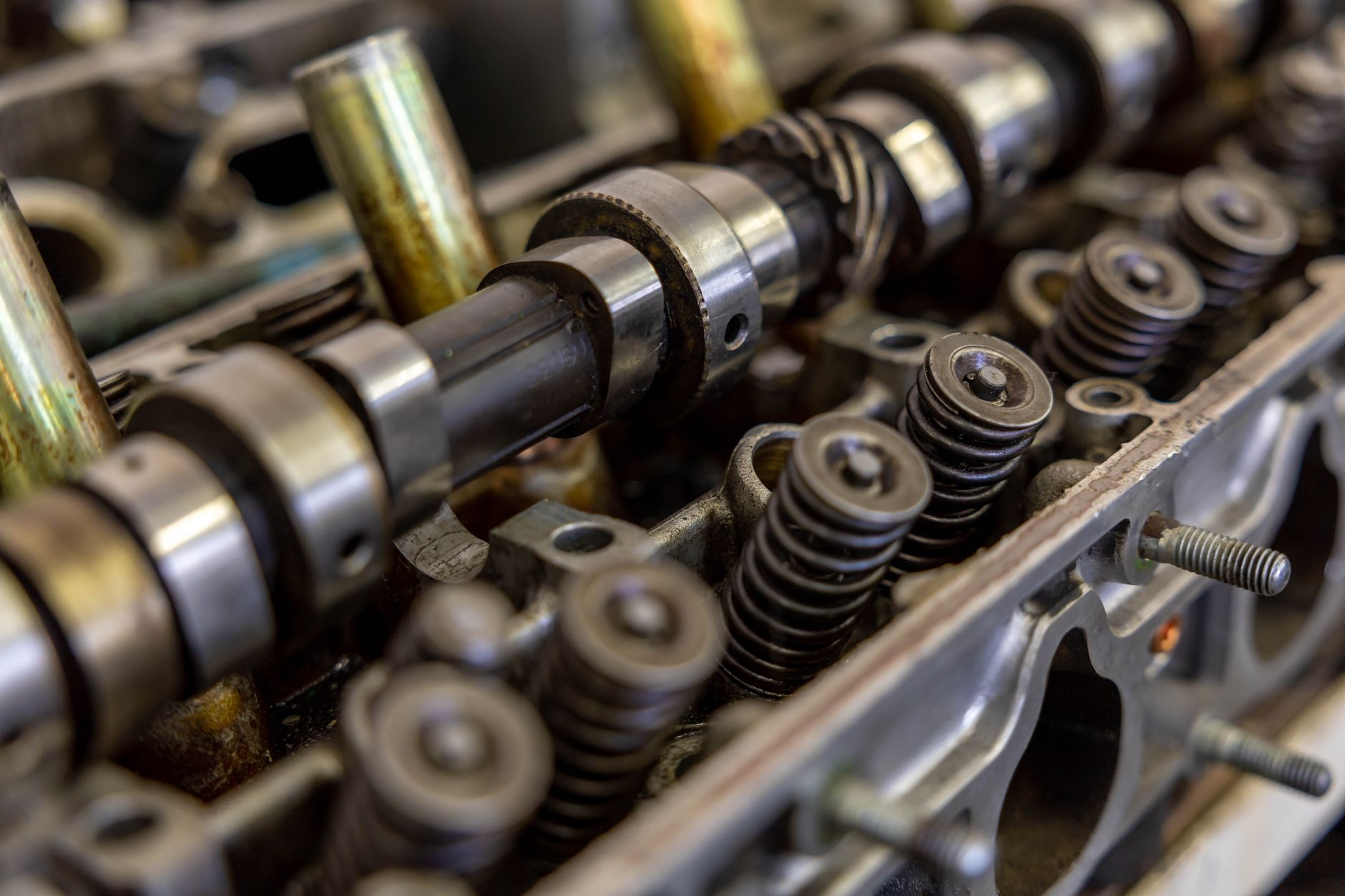
I specify this material for heavy machinery and automotive valve trains. It maintains its structural integrity far longer than standard oil-tempered wire under consistent thermal cycling.
What Are the Common Failure Modes in Industrial Springs?
Failure is typically caused by stress corrosion cracking, fatigue from exceeding design limits, or permanent deformation from overload.
Why do springs undergo permanent set?
Permanent set occurs when a spring is compressed beyond its elastic limit, resulting in a loss of free length and force capacity.
Once a spring takes a ‘set,’ it no longer provides the pre-load required for the assembly. Always design your installation to keep the operating deflection within 80% of the maximum spring travel.
How does fatigue life impact maintenance intervals?
Fatigue life is the number of cycles a spring can withstand before fracture, predicted by the Goodman diagram for your load.
In high-cycle applications, you must establish a replacement schedule before the predicted cycle count is reached. If you require assistance with load distributions, check our industrial machinery guide for troubleshooting tips.
How can I identify stress corrosion cracking?
Stress corrosion cracking appears as microscopic surface fissures that lead to sudden brittle failure under sustained tensile loads.
This is most common in stainless steel springs exposed to chlorides. To prevent this, ensure proper passivisation and surface treatments are applied during the manufacturing process.
Frequently Asked Questions
-
Can industrial springs be custom-manufactured?
Yes, industrial springs are routinely custom-manufactured to specific load, rate, and dimensional requirements for OEM equipment.
-
What is the difference between solid height and free length?
Free length is the unloaded state, while solid height is the length when all coils are compressed into full physical contact.
-
Are industrial springs compatible with gas struts?
Industrial springs and gas struts serve different purposes, but gas spring applications are often preferred for controlled motion.
-
How often should I inspect heavy-duty springs?
Inspect springs every 5,000 cycles or during scheduled machine maintenance to identify early signs of deformation or corrosion.