Industrial Springs: Types, Materials, and Specification Guide 2026
Industrial springs are essential mechanical components engineered to store or release energy, absorb shock, or maintain force between machine members in demanding environments. These devices function through material deformation and recovery, with designs varying significantly based on the specific load requirements, duty cycle, and environmental constraints of the application.
⚡ In a Rush? Key Takeaways
- Standard industrial spring cycle life ranges from 50,000 to over 100,000 cycles depending on the stress amplitude.
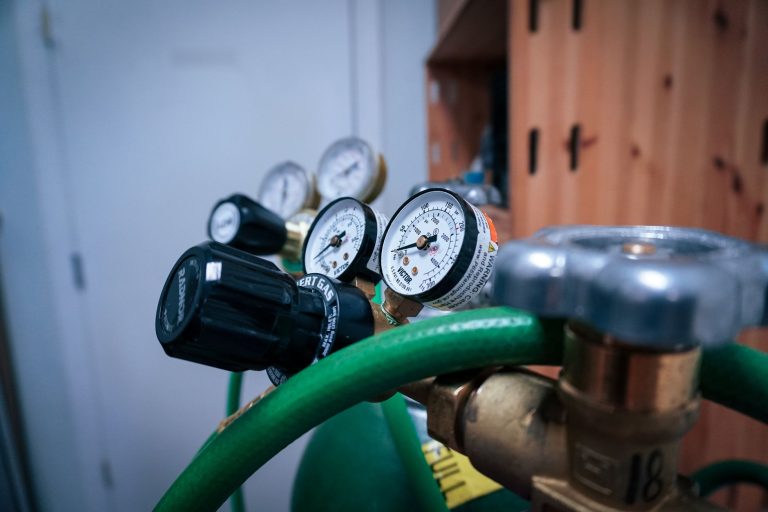
- Nitrogen-charged gas springs retain 80% force at -10°C, requiring uprating for extreme outdoor climates.
- Stainless steel 316 provides superior corrosion resistance in marine environments vs standard zinc-plated steel.
- Always verify the solid height of a coil spring to prevent coil bind and structural failure in your assembly.
What Are the Primary Types of Industrial Springs?
Industrial springs include compression, tension, torsion, and gas types, each engineered for specific force profiles and motion control needs.
How Do Compression Springs Function in Machinery?
Compression springs resist axial loads by shortening under pressure and returning energy as they expand to original free length.
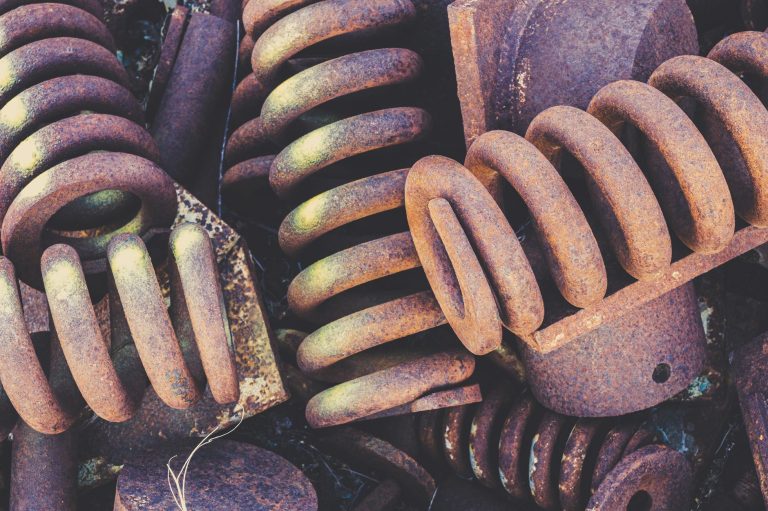
Compression springs are the most common industrial configuration, found in everything from basic door latches to heavy-duty industrial valves. They function by resisting a compressive force applied along the axis of the coil. Proper specification requires attention to the spring constant, or k-value, which defines the force required for a given displacement.
Engineers must also consider the solid height, which is the point where all coils touch, preventing further movement. Failing to account for this leads to coil bind, which frequently causes premature spring failure or permanent set in the material.
When Should You Choose Tension Springs?
Tension springs provide resistance to axial pulling forces, typically featuring end hooks or loops for secure mounting in assemblies.
Tension springs, often called extension springs, operate on the opposite principle of compression springs. They are designed to absorb and store energy by creating resistance to a pulling force. In spring force calculations, it is critical to ensure the end fittings do not become the weak link in the assembly.
Why Are Torsion Springs Used for Rotating Components?
Torsion springs exert a rotational force or torque by winding their coils tighter when subjected to angular deflection loads.
Torsion springs are specialized for applications involving rotational motion, such as hinge mechanisms, latches, and counterbalanced lids. Unlike linear springs, these rely on the wire’s resistance to bending. They are highly effective in compact spaces where linear movement is constrained by the machine housing.
How Do You Select the Right Material for Your Application?
Spring material selection depends on corrosion resistance, operating temperature, and fatigue strength required for the service life.
When Is Stainless Steel 316 Necessary?
Stainless steel 316 provides high corrosion resistance for industrial applications exposed to salt spray or acidic chemical agents.
In environments where moisture or chemical exposure is present, carbon steel will fail rapidly through oxidation. I consistently specify 316 stainless steel for marine, pharmaceutical, and food-grade machinery. While the initial component cost is higher, the extended maintenance intervals justify the investment.
Which Materials Offer the Highest Fatigue Strength?
Chrome vanadium and music wire offer superior fatigue resistance for high-cycle industrial machinery and precision automotive parts.
High-cycle environments demand materials with excellent elastic limits and fatigue properties. Chrome vanadium steel is the industry standard for springs subject to heavy shock loads or high-frequency cycling. For lighter, high-precision applications, music wire is preferred due to its consistent mechanical properties.
How Can You Diagnose Industrial Spring Failure?
Spring failure typically manifests through loss of force, physical deformation, or breakage at the end fittings or coil points.
What Causes Premature Loss of Force?
Force loss usually results from stress relaxation or operating the spring beyond its elastic limit in high-temperature environments.
If your assembly is losing its lift capacity, check for signs of permanent set or ‘sag’. This occurs when the spring is subjected to loads exceeding its elastic design limit. It is also common to see force drop in gas-charged spring units due to seal wear over time.
Why Do End Fittings Fail Before the Coil?
End fitting failure often stems from stress concentration points or fatigue induced by vibration in the mounting assembly.
The interface between the spring and the machine is often the most vulnerable point. If your design uses hook ends or ball sockets, these must be properly aligned to prevent side-loading. Side-loading creates uneven stress distribution, which accelerates fatigue cracking at the transition between the active coil and the fitting.
Frequently Asked Questions
-
Can I replace a mechanical spring with a gas spring?
Gas springs offer different force curves and damping, so they are not always direct replacements for mechanical torsion springs.
-
What is the standard cycle life for industrial springs?
Standard industrial springs are designed for 50,000 to 100,000 cycles, depending on the material grade and the stress range applied.
-
How do I calculate the force for a spring application?
Force is determined by the spring rate, calculated based on wire diameter, mean coil diameter, and the number of active coils.