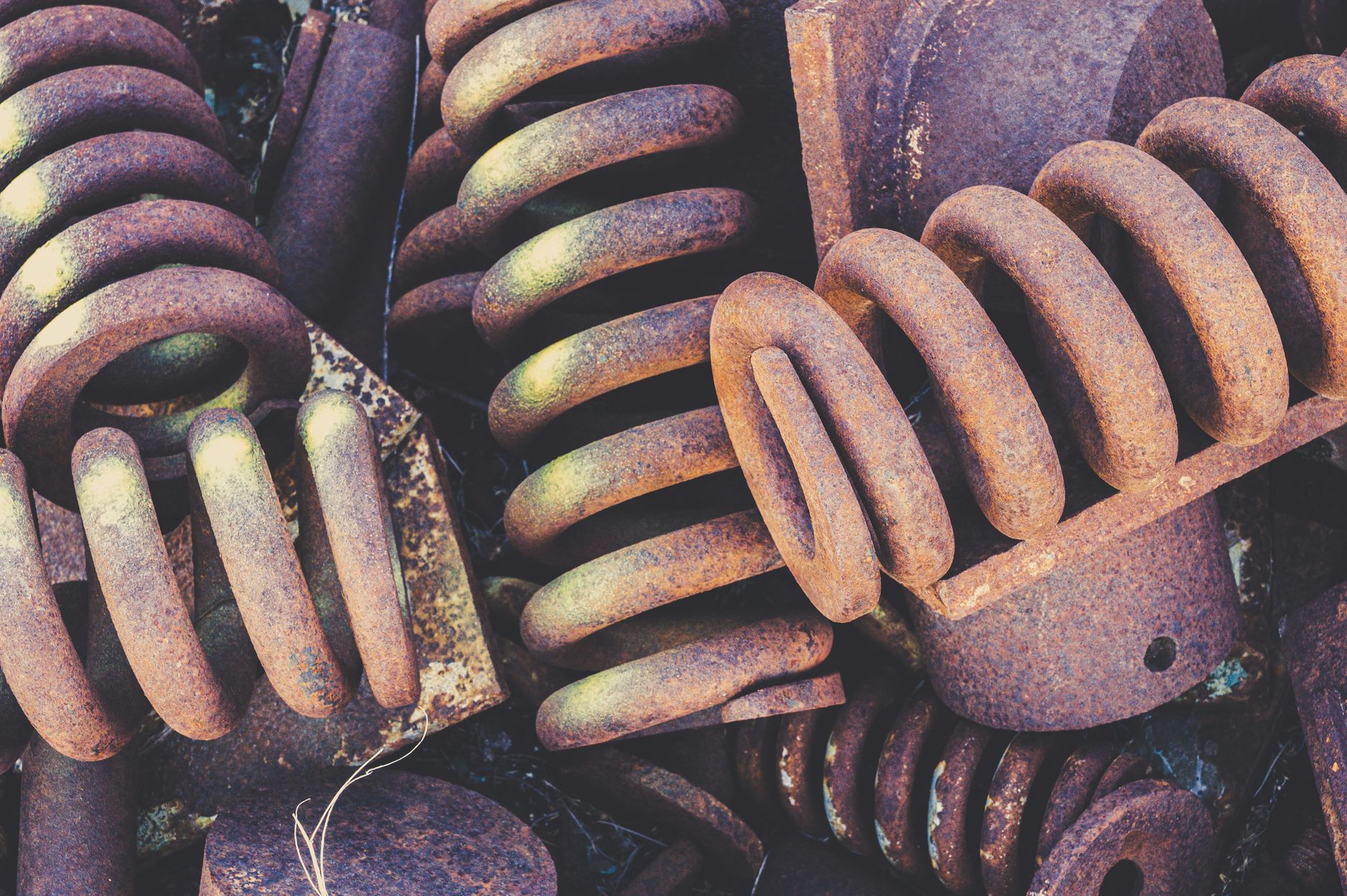
Spring Corrosion Resistance: A Technical Guide to Material Selection
Spring corrosion resistance is achieved by selecting high-chromium alloys or applying protective surface coatings to prevent oxidative degradation in moisture-rich environments. For industrial components, the material composition must account for both mechanical stress and the electrochemical potential of the operating atmosphere to avoid stress corrosion cracking.
⚡ In a Rush? Key Takeaways
- 316 stainless steel provides superior resistance to chloride-rich marine air up to 60°C.
- Standard carbon steel springs lose 100% of functional integrity within 48 hours of salt spray exposure.
- Zinc-nickel plating offers 500+ hours of protection in neutral salt spray testing environments.
- Always specify material grade for high-humidity sites; standard carbon is unsuitable for outdoor use.
Which Materials Provide the Best Natural Corrosion Resistance?
Natural corrosion resistance is provided by austenitic and martensitic stainless steels, specifically grades 302, 304, and 316 for springs.
Why is 316 stainless steel the industry standard for marine environments?
The 2-3% molybdenum content in 316 stainless steel provides essential pitting resistance in chloride-heavy marine and coastal atmospheres.
In the UK, where coastal salt spray is a constant factor for industrial machinery, 316 grade is the baseline requirement. It creates a stable passive chromium oxide layer that repairs itself when scratched, provided oxygen is present.
Unlike 304 grade, the addition of molybdenum specifically combats the localized corrosion common in sea-front industrial zones. This is vital for marine gas strut longevity where failure leads to hatch malfunction.
Can high-carbon steel ever be corrosion resistant?
High-carbon steel has zero natural corrosion resistance and requires external barriers like oil, grease, or plating to survive.
While AISI 1095 is excellent for fatigue strength, it oxidizes rapidly in ambient humidity. Without secondary protection, it will develop surface rust within hours of exposure to a standard 5% salt solution.
If you are managing industrial spring specifications, assume zero base resistance for these materials. They must be treated with phosphate, black oxide, or high-performance polymers.
What is the role of precipitation-hardened alloys in high-stress applications?
Precipitation-hardened alloys like 17-7 PH offer high tensile strength alongside corrosion resistance comparable to 300 series stainless.
- 17-7 PH maintains elasticity at temperatures up to 350°C.
- Provides excellent resistance to stress corrosion cracking in acidic environments.
- Requires strict heat treatment cycles to maximize both hardness and chemical stability.
What role does passivation play in maintaining corrosion resistance of stainless steel springs?
Passivation removes surface contaminants and enhances the protective chromium oxide layer, improving corrosion resistance after machining or welding.
During manufacturing, springs may pick up free iron, oils, or debris that can act as corrosion sites. A passivation bath—typically nitric acid or citric acid—dissolves these contaminants and allows the chromium in the alloy to react with oxygen, forming a uniform, passive film.
For springs, careful control of bath temperature, time, and rinsing is essential to avoid hydrogen embrittlement; over‑exposure can reduce fatigue life. Properly passivated 304 or 316 springs show markedly slower pitting initiation in salt spray tests compared to non‑passivated counterparts.
When Should You Use Surface Coatings Instead of Stainless Materials?
Surface coatings are preferred when base alloy strength requirements exceed the limits of stainless steel or when cost is critical.
How do zinc-nickel coatings perform compared to traditional galvanizing?
Zinc-nickel coatings provide 500 to 1,000 hours of salt spray resistance, significantly outperforming standard zinc or black oxide finishes.
In high-volume applications, zinc-nickel is the preferred choice for industrial fasteners and springs. It provides sacrificial protection, meaning the coating corrodes instead of the base steel.
For applications requiring specific Newton force tolerances, ensure the coating thickness does not interfere with the outer diameter dimensions of the spring.
Are polymer-based coatings viable for spring applications?
Polymer coatings provide excellent chemical barrier protection, though they can flake if the spring has a high spring index or travel.
If you use coatings, you must ensure the material can flex without cracking. Cracked polymers become traps for moisture and accelerate crevice corrosion underneath the coating.
How Do You Diagnose Spring Corrosion Failure?
Diagnosis involves identifying patterns like surface pitting, uniform oxidation, or brittle fractures caused by hydrogen embrittlement.
What is the visual indicator of hydrogen embrittlement?
Hydrogen embrittlement appears as sudden, brittle fractures often occurring during service without any visible warning signs like rust.
This is a major concern when cleaning or plating carbon steel springs. If the acid cleaning process is not managed, hydrogen ions infiltrate the steel lattice, creating microscopic cracks.
Why does crevice corrosion occur at the contact points of a spring?
Crevice corrosion occurs where debris accumulates between coils, creating a localized oxygen-depleted zone that destroys passive layers.
- Stagnant fluid pockets trigger electrochemical reactions.
- The contact area between coils acts as a prime site for pitting.
- Frequent operation can sometimes help break up stagnant layers.
Frequently Asked Questions About Spring Corrosion
-
Can I re-oil old carbon steel springs to restore resistance?
Re-oiling only slows surface oxidation and does not repair existing pitting or deep metallurgical corrosion that reduces fatigue life.
-
Does temperature impact corrosion rates in stainless steel?
Corrosion rates increase significantly above 60°C as the kinetic energy of corrosive agents overcomes the protective passive oxide film.
-
Is a visual inspection sufficient for safety-critical springs?
Visual inspection is insufficient; safety-critical springs require periodic non-destructive testing to detect internal crack formation.