Tension Springs: Engineering Selection Guide 2026
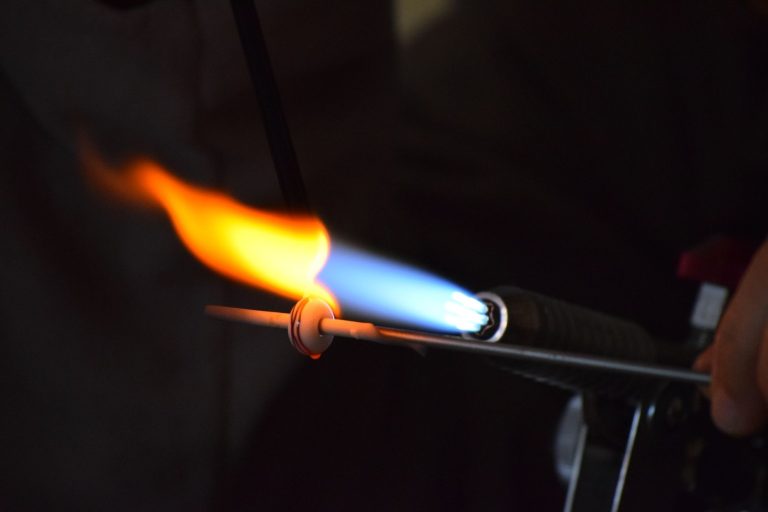
Thermal exposure exceeding the material’s operational threshold causes stress relaxation, leading to a permanent loss of initial tension and a shortened spring length.
When tension springs operate in elevated temperature environments, the atoms within the metal lattice gain mobility, which allows the internal stresses created during the winding process to dissipate. This phenomenon, known as stress relaxation, manifests as a loss of the original initial tension. For instance, carbon steel springs used in engines or boilers will undergo significant performance degradation once they exceed their maximum service temperatures (typically around 120°C to 150°C), resulting in a spring that no longer holds the required preload, causing loose connections or rattling in mechanical assemblies.
To mitigate these effects, engineers should utilize materials with superior thermal stability, such as Inconel or Chrome Vanadium alloys, which are designed to retain their mechanical properties at much higher temperatures. Additionally, designing the assembly to operate at a lower percentage of the material’s elastic limit can slow the rate of relaxation. If high temperatures are unavoidable, practitioners must calculate the “relaxed” load value rather than the “cold-state” value to ensure the mechanism remains functional throughout its expected lifespan. Regular inspection schedules are recommended for any tension spring application subjected to periodic thermal cycling, as these transitions accelerate metal fatigue and structural deformation.
What are the primary technical parameters of a tension spring?
A tension spring is defined by wire diameter, body length, outer diameter, spring rate, and initial tension, which determine its load-bearing limit.
Tension springs function by storing energy via the tension of the coil wind. Unlike compression springs, these components remain under a calculated preload, known as initial tension, even before external force is applied.
When selecting a spring for industrial applications, the spring index is a critical factor. This is the ratio of the mean coil diameter to the wire diameter, typically maintained between 4 and 12 for optimal manufacturing efficiency and cycle life.
⚡ In a Rush? Key Takeaways
- Maintain a spring index between 4 and 12 to ensure manufacturing consistency.
- Initial tension allows the spring to resist small forces before the coils begin to separate.
- 316 stainless steel provides superior corrosion resistance in marine and chemical environments.
- Proper mounting geometry is required to prevent stress concentrations at the loop interface.
- Verdict: Always specify the required spring rate and initial tension in N/mm for accurate performance.
How is initial tension calculated for industrial use?
Initial tension is the internal force holding coils together, measured in Newtons and dependent on the coil wind angle during manufacture.
Initial tension allows a tension spring to remain closed until the applied load exceeds the internal coil force. This parameter is vital for applications requiring precise response thresholds.
In high-cycle machinery, relying solely on initial tension for load retention is risky. Design constraints should always consider the gas spring force calculator logic if the application requires controlled damping alongside retraction.
What wire materials provide the highest cycle life?
High-carbon steel wire (ASTM A228) is standard for dry indoor use, while 316 stainless steel offers essential corrosion resistance.
- ASTM A228 Music Wire: Superior tensile strength for high-stress applications.
- ASTM A313 Stainless Steel: Corrosion resistance for marine grade requirements.
- Chrome Silicon: Excellent fatigue resistance for high-temperature and shock-loading scenarios.
- Phosphor Bronze: Used primarily in electrical components where conductivity is required.
How do I determine the correct hook or loop configuration?
Hook and loop types must be selected based on the mounting point geometry, material thickness, and the required total free length.
Why is the loop-to-body transition a common failure point?
Stress concentrations occur at the first coil interface, meaning bending radii must be generous to prevent fatigue crack propagation.
Many failures in industrial settings result from sharp bends at the transition from the spring body to the hook. I always specify a minimum bend radius equal to the wire diameter to distribute stress across the transition zone.
If your application involves vibration, consider using swiveling attachments to allow the spring to align with the pull vector. Misalignment creates asymmetrical stress that significantly reduces the cycle life of the spring assembly.
When should you use side loops versus crossover loops?
Crossover loops offer better axial alignment, while side hooks are preferred for applications with restricted installation space.
| Feature | Side Hook | Crossover Loop |
|---|---|---|
| Alignment | Poor | Excellent |
| Installation | Easy | Moderate |
| Stress Distribution | Low | High |
What other end configurations exist besides hooks and loops?
Plain ends, squared ends, ground ends, and threaded ends are common alternatives that affect spring rate, load distribution, and installation.
Plain ends are simply the last coil left open; they are used when the spring is to be threaded into a hole or over a shaft. Because they lack a bend, stress concentrations are minimal, but they provide no inherent retaining feature and require a separate fastener or adhesive.
Squared ends are produced by grinding the last coil flat, providing a flat bearing surface that can sit against a housing; this improves load transfer and reduces buckling tendency. Ground ends (often called closed and ground ends) are both squared and smoothed, offering the best surface finish for high‑precision applications and minimizing friction.
Threaded ends involve machining a thread onto the end coil, allowing the spring to be screwed into a mating part; this configuration is useful for adjustable preload but introduces a stress riser at the thread root, so the thread relief diameter should be kept larger than the wire diameter.
What are the common failure modes in high-cycle environments?
Fatigue failure at the loop attachment and loss of initial tension due to thermal set are the most common industrial failure modes.