Industrial Springs: A Guide to Specification and Application in 2026
What are the primary types of industrial springs used in machinery?
Industrial springs include helical compression, tension, torsion, and gas-charged springs, each serving distinct force application roles.
⚡ In a Rush? Key Takeaways
- Standard helical compression springs maintain linear force responses for over 100,000 duty cycles.
- Gas springs require 20% force uprating when operating in environments below 0°C.
- Stainless steel 316 springs are necessary for corrosion resistance in environments above 80% humidity.
- Always specify spring rate (N/mm) rather than free length to ensure operational consistency.
How do helical compression springs function in mechanical assemblies?
Helical compression springs store mechanical energy by resisting axial force, typically featuring linear rate characteristics for stability.
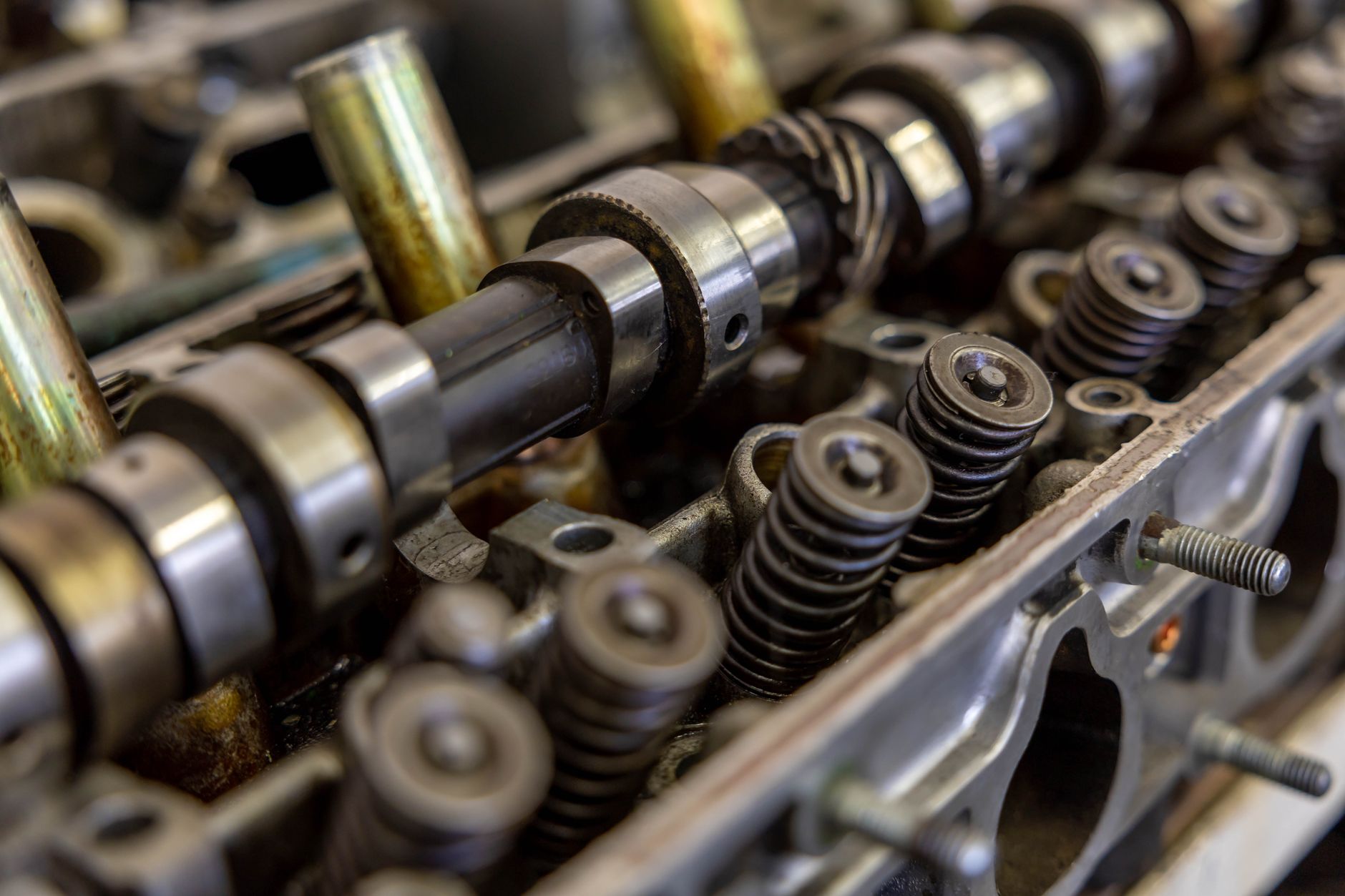
Compression springs are the backbone of mechanical load management in factory automation. They resist displacement until reaching their solid height, at which point the coils bind.
I frequently see engineers select based on wire diameter alone, but the pitch and mean coil diameter are what dictate the actual spring rate. Always verify the buckling limit for long, slender springs before final integration.
- Material: Carbon steel (music wire) or 302 stainless.
- Max cycles: Up to 500,000 in optimal loading.
- End finish: Ground ends are mandatory for flat-surface seating.
What distinguishes gas springs from mechanical coil springs?
Gas springs use compressed nitrogen to provide assist force, offering a variable-rate curve and controlled damping for lid movement.
Unlike metal springs, gas-charged units are not constant-force devices; the internal pressure increases as the piston rod enters the cylinder. This produces a progressive force curve that is ideal for heavy lids or access panels.
When selecting these for industrial machinery enclosures, remember that seal friction accounts for a small percentage of total force. Always check that the gas spring force calculation accounts for the mounting angle relative to the center of mass.
How do I specify industrial springs for high-cycle environments?
Specifying for high-cycle use requires checking fatigue limits, stress range calculations, and material surface finish quality standards.
What material properties impact the longevity of a spring?
High-strength alloys like chrome-silicon or stainless steel 17-7 PH are selected for superior fatigue resistance and thermal stability.
In high-cycle applications exceeding 100,000 operations, carbon steel often suffers from stress corrosion cracking. I recommend migrating to shot-peened high-carbon steel to induce compressive residual stress, which delays crack initiation.
| Material | Cycles (Avg) | Env. Suitability |
|---|---|---|
| Music Wire | 100k | Dry/Indoor |
| Chrome-Silicon | 500k+ | High-Stress/Dynamic |
| 316 Stainless | 250k | Corrosive/Marine |
Why does the operating temperature matter for industrial springs?
Temperature shifts alter the shear modulus of metal springs and change the internal pressure of nitrogen-charged gas spring units.
Metal springs lose structural stiffness as temperatures climb toward 200°C. For any machine guard exposed to process heat, standard steel will fail, and heat-resistant alloys are non-negotiable.
Gas springs are more sensitive, losing nearly 0.3% of force for every degree Celsius drop. If your equipment operates outdoors in winter, over-specifying the initial force is the only way to ensure reliable actuation.
What surface treatments improve spring durability?
Coatings like zinc plating, phosphate conversion, and polymer finishes protect springs from corrosion, wear, and fatigue cracking.
In harsh environments, a thin zinc or zinc-nickel layer provides sacrificial protection, extending service life by up to 30% compared to bare steel. Phosphate coatings improve lubricity and aid in subsequent painting or sealing, while polymer overlays (e.g., nylon or PTFE) reduce friction and prevent galling in dynamic applications.
Selecting the appropriate treatment depends on the operating medium: marine settings favor hot-dip galvanizing or 316 stainless with a clear sealant, whereas high‑temperature processes may require high‑temperature silicone or ceramic coatings that retain integrity above 250 °C.
| Treatment | Typical Use | Benefit |
|---|---|---|
| Zinc plating | General indoor/outdoor | Corrosion barrier, sacrificial |
| Phosphate coating | Pre‑paint, oil‑retention | Improved lubricity, adhesion |
| Polymer (nylon/PTFE) overlay | Dynamic, high‑wear | Low friction, wear resistance |
| Ceramic coating | High‑temp (>250 °C) | Oxidation resistance, thermal stability |
What are the most common industrial spring failure modes?
Failures usually stem from solid height compression, buckling, stress relaxation, or corrosion, often linked to improper selection.
How can I identify stress relaxation in mechanical springs?
Stress relaxation occurs when springs remain compressed for extended periods, leading to permanent loss of free length and force.
If you find that a machine’s tension remains lower than the initial spec after 12 months, you are likely looking at stress relaxation. You can often mitigate this by using a larger mean coil diameter or selecting a material with a higher relaxation resistance.
How do I diagnose a failed gas spring assembly?
Sudden force drop indicates seal failure or nitrogen leakage, whereas slow drift usually points to environmental pressure variations.
Before ordering replacements, verify that the end fittings have not seized, which causes lateral bending on the rod. Check out our gas strut replacement finder to ensure you are selecting a compatible replacement for your specific machine model.
Frequently Asked Questions
-
Can industrial springs be repaired?
Industrial springs cannot be repaired because the material integrity is compromised by cycling and the nitrogen charge is sealed.
-
Is a spring rate constant?
Most coil springs are linear, but the effective rate can change if the spring reaches solid height or experiences buckling issues.
-
Are metric and imperial springs interchangeable?
They are rarely interchangeable due to wire diameter and coil pitch differences that affect the total spring rate and fitment.