Gas Struts: A Professional Guide to Selection and Specification in 2026
What Are Gas Struts and How Do They Function?
Gas struts are sealed cylinders containing nitrogen gas and hydraulic oil, providing force for lifting, lowering, or dampening loads.
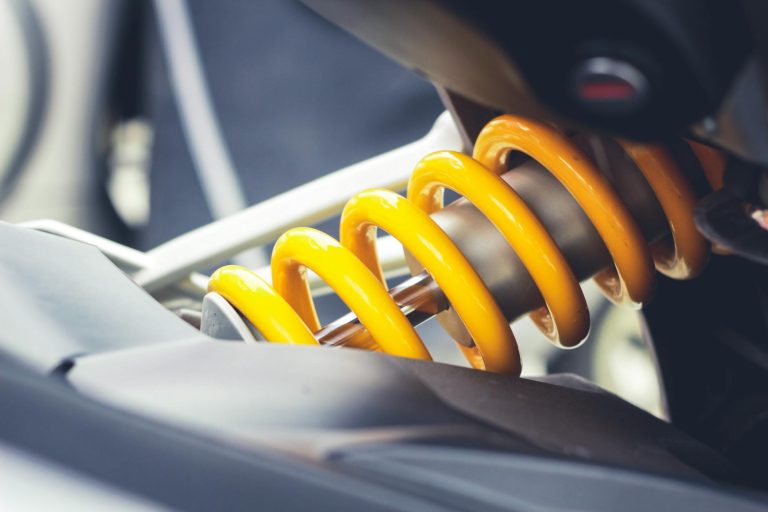
A gas strut, technically known as a gas spring, converts internal nitrogen pressure into mechanical force via an extending rod. Unlike mechanical coil springs, gas struts provide a nearly constant force throughout the stroke, which simplifies the design requirements for hatch, lid, and bonnet applications.
The internal hydraulic oil circuit provides damping, which prevents slamming and ensures smooth deceleration at the end of the extension phase. Professional specification requires understanding that these components are pressure-rated and temperature-sensitive systems designed for specific cycle lives.
Why Is Correct Force Specification Critical?
Incorrect force leads to structural stress, hardware failure, or dangerous lid collapse, necessitating precise Newton calculations.
Specifying force in Newtons (N) requires measuring the weight and geometry of the application accurately. I frequently see industrial designs where the force is estimated rather than calculated, leading to premature seal degradation or overloaded hinges. Use our gas spring force calculator to determine your exact requirement before purchasing.
How Does Ambient Temperature Affect Gas Strut Performance?
Internal nitrogen pressure drops by approximately 1.5% for every 1°C decrease, causing performance loss in cold environments.
In northern UK climates or refrigerated industrial settings, standard gas struts can suffer significant force loss during winter months. If an outdoor cabinet or tailgate fails to stay open when the temperature drops to -5°C, the strut is not necessarily broken; it is likely an underspecified unit struggling with thermal contraction.
- Standard operating range: -30°C to +80°C.
- Low-temperature units: specialized seals required for sub-zero performance.
- Thermal compensation: over-specifying force by 20% for outdoor, exposed equipment.
How Do I Measure Gas Struts for Replacement?
Accurate measurement requires extending the unit fully to determine the eye-to-eye length and measuring the total stroke of the rod.
When replacing worn units, avoid relying on printed part numbers alone, as manufacturers frequently change specifications. Always measure the existing component physically before you search for a compatible replacement to ensure the geometry remains unchanged.
What Is the Correct Way to Measure Extended and Compressed Length?
Measure from the centre of one mounting point to the other with the rod fully extended and fully retracted for the compressed length.
The extended length is the total distance between pivot points when the strut is fully open. The compressed length represents the retracted size, which determines if your hardware will fit within the closed panel space. Ensure your measurements account for the exact eye-to-eye distance to prevent binding.
Which End Fittings Are Most Common in 2026?
The most common end fittings are 10mm ball sockets, though clevis brackets and eyelets are standard for heavy industrial machinery.
The fitting type is as important as the strut length; a ball socket requires a 10mm or 8mm ball stud, while a clevis mount requires a pin. Using the wrong fitting will result in the strut detaching or failing to articulate correctly through the arc of travel.
| Fitting Type | Typical Application | Load Rating |
|---|---|---|
| Ball Socket | Automotive/Furniture | Standard |
| Clevis Bracket | Agricultural/Heavy Duty | High |
| Eyelet | Industrial Machinery | High |
What Are the Most Common Gas Strut Failure Modes?
Failure manifests through loss of nitrogen pressure, seal deterioration, or corrosion of the polished steel piston rod surface.
Understanding failure is essential for preventive maintenance, especially in high-cycle environments. If you suspect a malfunction, consult our guide on troubleshooting stuck or failed gas struts to determine if replacement is required.
Why Do Gas Struts Lose Force Gradually?
Micro-leakage of nitrogen gas past the primary seal causes a gradual decline in the extension force over the component’s cycle life.
This is a natural process rather than a defect, provided the unit meets its rated cycle life, typically 50,000 cycles. If a tailgate or lid begins to drift downward, the internal pressure has dropped below the threshold required to counter the lid’s mass.
Can Gas Struts Be Repaired or Recharged?
Standard gas struts are hermetically sealed units that cannot be recharged or repaired in the field after nitrogen gas leakage occurs.
Once a seal fails or the nitrogen leaks, the entire unit must be replaced. Attempting to drill or refill a cylinder is extremely dangerous and carries a significant risk of high-pressure explosion.
What Materials Are Gas Struts Made From and How Does Corrosion Resistance Affect Lifespan?
Gas struts are typically constructed from carbon steel, stainless steel, or coated alloys, with material choice directly impacting corrosion resistance and service life in harsh environments.
Carbon steel struts are the most economical option and rely on protective coatings such as zinc plating or paint to resist rust. In dry, indoor environments these coatings can provide adequate protection, but exposure to moisture, salt, or chemicals can lead to coating breakdown and eventual corrosion of the piston rod, which compromises seals and increases friction.
Stainless steel grades (e.g., AISI 304 or 316) offer inherent corrosion resistance, making them suitable for marine, food‑processing, or outdoor agricultural equipment where regular wash‑downs occur. Although more expensive, they eliminate the need for additional coatings and maintain smooth rod surfaces longer, preserving seal integrity and extending cycle life.
Some manufacturers provide specialty treatments like nitriding or chrome plating on carbon steel rods to improve surface hardness and corrosion resistance at a lower cost than full stainless steel. These treated struts are common in automotive tailgates and industrial machinery where moderate exposure is expected.
| Material | Typical Use | Corrosion Resistance |
|---|---|---|
| Carbon steel (coated) | Indoor furniture, light‑duty automotive | Moderate (depends on coating) |
| Stainless steel (304/316) | Marine, food‑processing, outdoor agriculture | High |
| Nitrided/chrome‑plated steel | Automotive tailgates, industrial equipment | Good |
Frequently Asked Questions
-
How do I know if my gas strut is too strong?
Excessive force causes the lid to spring open violently, resisting closure and potentially damaging hinges or latching mechanisms.
-
Is it necessary to replace gas struts in pairs?
Yes, always replace struts in pairs to ensure even force distribution, prevent asymmetrical stress, and maintain consistent operation.
-
Does the orientation of the gas strut matter?
Most gas struts must be mounted rod-end down to keep the internal oil in contact with the seal, preventing premature leakage.