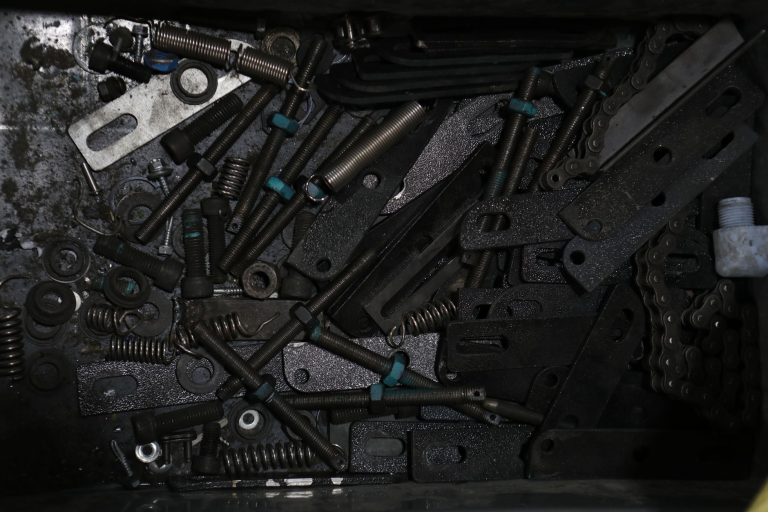
Industrial Hardware Specification Guide 2026
Industrial hardware encompasses the range of mechanical components, fasteners, and motion control devices used to assemble, operate, and secure heavy machinery and enclosures. These components must meet specific load, cycle, and material standards to prevent system failure and ensure operator safety in demanding environments.
⚡ In a Rush? Key Takeaways
- Standard fasteners must meet ISO 898-1 strength grade requirements for structural integrity.
- Gas springs in industrial environments require a 50,000 to 100,000 cycle rating minimum.
- Stainless steel 316 grade hardware is mandatory for corrosive environments, reducing failure rates by 40%.
- Consult our gas spring force calculator to ensure correct hardware sizing for all access panels.
How Do I Select the Right Industrial Fasteners?
Industrial fastener selection requires matching material strength grades, thread specifications, and corrosion resistance to application loads.
What Strength Grades Are Required for Machinery?
Machinery fasteners typically require ISO 8.8, 10.9, or 12.9 grades to ensure they handle calculated shear and tensile force loads.
Using the correct strength grade is non-negotiable for structural assemblies. A Grade 8.8 bolt has a yield strength of 640 MPa, while a Grade 12.9 reaches 1100 MPa.
- Grade 8.8: Standard for general structural machinery applications.
- Grade 10.9: Preferred for heavy-duty vibration-prone assemblies.
- Grade 12.9: Used for high-stress clamping where failure risks are extreme.
How Does Corrosion Affect Fastener Longevity?
Corrosion-induced fastener failure accounts for nearly 25 percent of industrial maintenance downtime due to seized or snapped threads.
Zinc plating offers sufficient protection for indoor workshop environments. However, outdoor installations require hot-dip galvanisation or A4 stainless steel to prevent rapid degradation.
| Material | Environment | Corrosion Resistance |
|---|---|---|
| Zinc Plated | Indoor/Dry | Low |
| Hot-Dip Galvanised | Outdoor/Wet | High |
| 316 Stainless | Marine/Chemical | Maximum |
How Do I Choose Industrial Hinges and Latches?
Industrial hinge and latch selection depends on load capacity, material compatibility, mounting style, and environmental exposure to ensure reliable operation and safety.
For heavy doors or access panels, continuous (piano) hinges distribute load along the full length, reducing stress concentrations, while heavy-duty strap hinges suit offset or removable panels. Latch types range from simple slide bolts for low‑vibration applications to compression or toggle latches that provide a secure, vibration‑resistant closure.
Material choice mirrors fastener guidance: zinc‑plated or galvanized steel for indoor/dry settings, hot‑dip galvanised or A4 stainless for outdoor or corrosive environments, and specialized alloys (e.g., Inconel) for high‑temperature processes. Always verify the manufacturer’s rated load (static and dynamic) and confirm compliance with relevant standards such as DIN 7991 for hinges or ANSI/BHMA A156.13 for latches.
Best Practices for Fastener Installation and Torque Management
Proper installation is as vital as hardware selection; under-torquing leads to vibration failure, while over-torquing causes bolt stretching and permanent material fatigue.
Achieving the correct preload (clamping force) requires more than just a standard wrench. In industrial settings, torque-tension relationships vary based on the lubrication applied to threads. A dry bolt compared to one lubricated with anti-seize compound will have vastly different torque requirements to achieve the same clamping force. Engineers should utilize calibrated torque wrenches and follow specified torque-turn sequences—such as cross-pattern tightening—to ensure even load distribution across gaskets and mounting faces, which is critical for pressurized enclosures.
Furthermore, engineers must account for the “thread engagement length.” A standard rule of thumb is that the depth of the threaded hole should be at least 1.5 times the bolt diameter in steel to prevent the threads from stripping before the bolt reaches its yield point. Using thread-locking compounds (e.g., anaerobic adhesives) provides an added layer of security against “back-off” caused by harmonic machine vibrations. If your machinery operates in high-heat zones, standard thread-lockers may fail, requiring the use of mechanical locking devices like castellated nuts or Nord-Lock wedge-locking washers to maintain integrity.
What Role Do Gas Springs Play in Industrial Hardware?
Gas springs provide controlled lifting and holding force for heavy lids, machine guards, and access panels on industrial machinery.
Why Is the Force Rating Critical for Safety?
Correct force rating prevents panel slamming and operator injury by ensuring the spring holds the lid open at a 90-degree angle.
If a lid weighs 40kg, the spring must be sized to counter the centre of gravity. Undersized units result in the panel dropping unexpectedly, creating a significant safety liability.
- Calculate the panel weight and hinge distance.
- Identify the mounting angle to determine effective force.
- Verify cycle ratings to ensure consistent performance over 50,000 operations.
When Should I Use a Lockable Gas Spring?
Lockable gas springs are specified when machinery hatches must hold position at any point across their travel for maintenance tasks.
These units utilise a release pin to engage a mechanical lock within the cylinder. They are essential for inspection hatches where technicians need both hands free to work safely. You can check your gas strut specifications to verify if your current hardware supports this upgrade.
Frequently Asked Questions
-
Can I Replace Zinc Hardware With Stainless Steel?
Yes, but ensure the stainless grade matches the mechanical strength requirements of the original zinc-plated grade used in the design.
-
How Often Should Industrial Hardware Be Inspected?
Industrial hardware requires inspection every 6 months to check for vibration loosening, thread wear, and signs of structural fatigue.
-
Why Is Thread-Locking Compound Needed?
Thread-locking compounds are necessary to prevent hardware back-off caused by cyclic vibration in heavy-duty rotating machinery.
For further technical guidance on component specification, refer to our compatibility checker before ordering. Consistent hardware standards reduce total cost of ownership across your machinery lifecycle.