Industrial Springs: Selection, Specification, and Sourcing Guide 2026
Industrial springs are mechanical devices designed to store and release energy to control motion, dampen vibration, or apply force within a mechanical assembly. In 2026, engineering teams specify these components based on load capacity, deflection rates, and environmental exposure requirements rather than generic sizing.
⚡ In a Rush? Key Takeaways
- Standard industrial spring cycles exceed 50,000 movements before fatigue failure occurs.
- Temperature extremes require material adjustment, with force drops of 1.5% per degree Celsius.
- Stainless steel grade 316 is required for 95% of marine and corrosive industrial environments.
- ✅ Always specify spring rates in Newtons per millimetre (N/mm) to ensure design accuracy.
What Are the Primary Types of Industrial Springs?
Industrial springs include compression, extension, torsion, and flat designs, each chosen for specific force applications and energy storage.
How Do Compression Springs Operate in Machinery?
Compression springs offer resistance to axial compressive loads, with force determined by wire diameter, coil count, and material modulus.
Compression springs are the most common type used in industrial enclosures and heavy machinery. They exert force by pushing back when compressed by an external load.
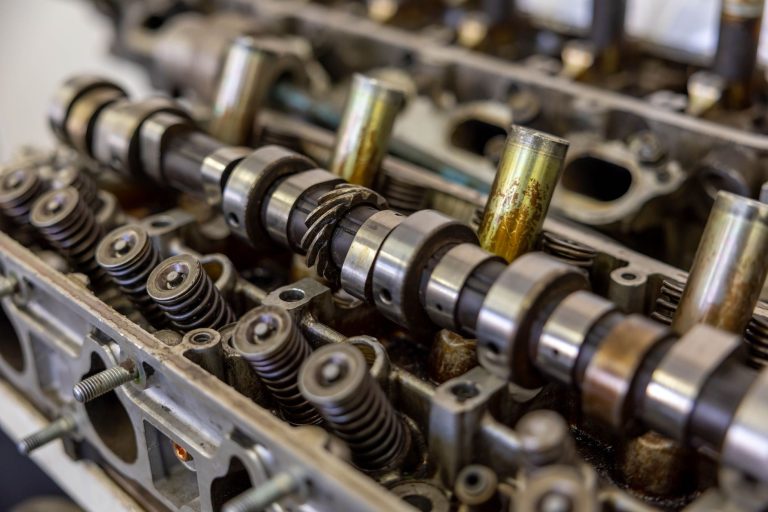
In high-load environments, I often specify these for valve mechanisms or suspension systems. Accuracy in the spring rate, measured in N/mm, is critical to prevent premature binding or buckling.
What Distinguishes Extension Springs from Other Varieties?
Extension springs provide resistance to pulling forces and typically feature end hooks or loops for mounting to mechanical components.
- Initial tension allows the spring to remain closed until a threshold force is met.
- End hook design determines the failure point in high-vibration applications.
- Frequent use in door mechanisms, tensioning assemblies, and automated equipment.
When Should You Specify Torsion Springs?
Torsion springs store energy through angular rotation, providing torque resistance proportional to the angle of the deflected coil.
Torsion springs are used primarily for hinges, counterbalance systems, and locking mechanisms. The mechanical advantage depends entirely on the arm length and the wire gauge.
How Do I Correctly Size Industrial Springs for My Application?
Sizing involves calculating the load capacity, physical envelope constraints, and required spring rate to achieve desired movement.
What Parameters Determine the Spring Constant (Rate)?
The spring rate is calculated by dividing the force applied by the deflection distance, typically expressed in Newtons per millimetre.
Understanding the spring rate ensures the component performs predictably. If you are calculating for a lid or panel, use our gas spring force calculator to verify your mechanical assist requirements.
Why Does Material Selection Impact Spring Performance?
Material selection is dictated by the operating environment, with stainless steel preferred for corrosion and music wire for fatigue.
| Material | Primary Benefit | Best Use Case |
|---|---|---|
| Music Wire | High fatigue life | General machinery |
| 316 Stainless | Corrosion resistance | Marine/Chemical |
| Inconel | Heat resistance | High-temp engines |
How Should You Manage Mounting and End Fittings?
Mounting methods include ground ends, hooks, or custom machined fittings to ensure the spring remains stable under load cycles.
Poorly specified end fittings are the leading cause of premature spring failure. Always ensure the seating area is polished to prevent stress risers on the wire surface.
How Is Spring Fatigue Life Evaluated?
Fatigue life is assessed by subjecting springs to cyclic loading until failure, using S‑N curves and standards such as ASTM A228 or DIN 2095 to predict service life.
Testing involves measuring the number of load cycles at a given stress amplitude; results are plotted to create an S‑N (stress‑number) curve that shows the inverse relationship between stress amplitude and cycles to failure. Engineers use these curves to ensure the spring will exceed the required number of cycles in the application.
Key factors influencing fatigue life include surface finish, shot peening, residual stresses, and environmental effects like corrosion or temperature. Applying surface treatments such as shot peening can increase fatigue life by 20‑50 % by introducing compressive residual stresses that inhibit crack initiation.
Which Industrial Spring Manufacturers Should I Consider?
Leading UK and European manufacturers offer both catalogue stock and bespoke custom-engineered spring solutions for industry.
How Can I Source Quality Springs in the UK?
The UK market features established manufacturers like Airedale, Lee Spring, and European Springs for both small and bulk supply.
When sourcing, always demand a certificate of conformity. For bespoke projects, contact our industrial and agricultural division to discuss specific tolerances.
What Factors Influence Lead Times for Bespoke Springs?
Custom spring lead times depend on material availability, specific tooling requirements, and the complexity of the required wire form.
If you are working on a prototype, seek out suppliers with rapid small-batch manufacturing capabilities. Our gas strut spec sheet builder can also assist in drafting requirements for related hardware.
Frequently Asked Questions About Industrial Springs
-
How do I test if an industrial spring has failed?
Failure is identified through permanent deformation (set), loss of initial tension, or visible stress cracks on the coil wire.
-
Can I substitute a standard spring for a custom part?
Substitution is possible only if the physical envelope, spring rate, and material fatigue limits match the original specifications.
-
Are there international standards for spring manufacturing?
Springs are typically manufactured to DIN or BS EN standards, which dictate the acceptable tolerances for dimensions and wire gauge.