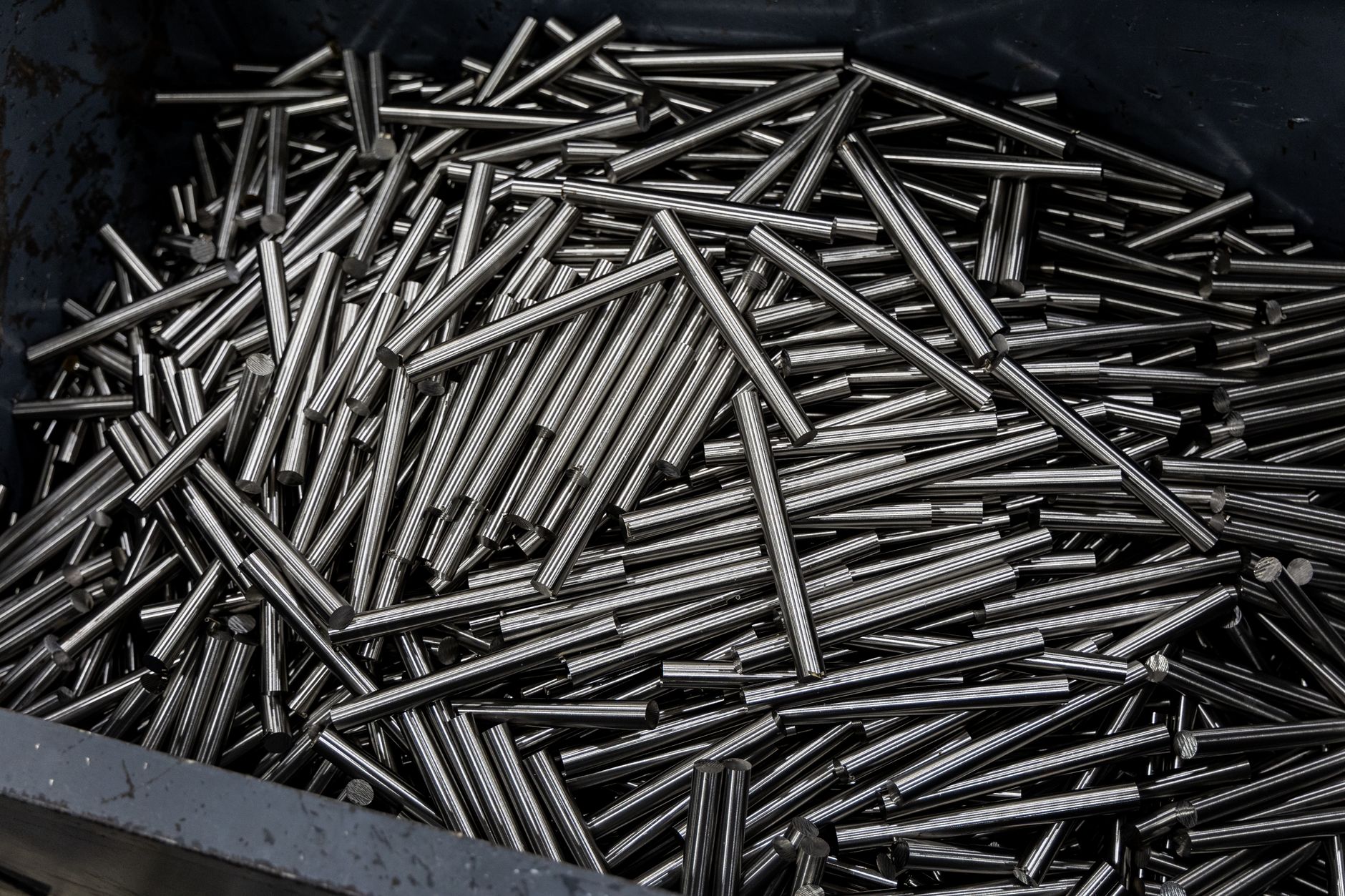
Stainless Steel Springs: Materials, Grades, and Selection Guide 2026
Stainless steel springs are specialized mechanical components manufactured from iron-based alloys containing at least 10.5% chromium, providing inherent resistance to oxidation and environmental degradation. These components are specified when carbon steel’s susceptibility to rust is incompatible with the operational environment, particularly in moisture-rich, saline, or chemical-exposed settings.
⚡ In a Rush? Key Takeaways
- 316 grade stainless steel provides 30% higher corrosion resistance than 304 in marine environments.
- Operating temperatures for standard stainless springs typically cap at 250°C before material relaxation occurs.
- Grade 302 remains the industry standard for high-tensile spring performance in non-corrosive-critical applications.
- ✅ Use 316 stainless for all offshore, pharmaceutical, and high-moisture industrial spring applications.
Why Are Stainless Steel Springs Essential for Harsh Environments?
Stainless steel springs prevent structural failure in corrosive environments by resisting oxidation, salt spray, and chemical degradation.
How does corrosion resistance impact spring longevity?
Corrosion creates stress risers on the wire surface, which accelerate fatigue cracking and cause premature spring snapping failures.
In standard carbon steel springs, surface oxidation acts as a catalyst for hydrogen embrittlement and fatigue. Once the surface finish is compromised by rust, the effective cross-sectional area of the wire is reduced, leading to increased localized stress. Stainless steel alloys form a self-healing passive chromium oxide layer that prevents this progression.
- Prevents stress corrosion cracking in high-humidity settings.
- Eliminates the need for secondary coatings like zinc or cadmium plating.
- Maintains consistent spring rate despite surface exposure to atmospheric elements.
Which stainless steel grades are used for spring manufacturing?
The most common grades are 302 for high strength, 304 for general corrosion resistance, and 316 for extreme marine applications.
Material selection depends heavily on the chemical environment. 302 grade is the workhorse of the industry, offering excellent cold-worked strength, while 316 provides superior pitting resistance due to molybdenum content.
| Grade | Primary Benefit | Application |
|---|---|---|
| 302 | High Tensile Strength | General industrial machinery |
| 304 | Good Corrosion Resistance | Medical and food preparation |
| 316 | Maximum Pitting Resistance | Offshore and marine environments |
How Do I Select the Correct Spring Grade for My Application?
Selection is based on matching the chemical, thermal, and fatigue requirements of the environment to the specific stainless grade.
What are the temperature limits for stainless steel springs?
Stainless steel springs operate effectively between -200°C and 250°C, with performance dropping significantly above 300°C due to relaxation.
While stainless steel remains structurally sound at high temperatures, the elastic modulus decreases. If your application involves continuous heat, you must verify the material relaxation limits before finalizing the spring force calculation.
- Ambient to 200°C: Minimal degradation in spring rate.
- 200°C to 300°C: Accelerated loss of stored mechanical energy.
- Above 300°C: Material undergoes creep, leading to permanent set.
When is 316 stainless required over 304 grade?
Grade 316 is required when the environment involves saline exposure, chloride-heavy chemicals, or acidic industrial atmospheric gas.
316 stainless includes 2-3% molybdenum, which is absent in 304. This addition is the differentiator for marine applications, preventing deep localized pitting that occurs in stagnant seawater. For marine grade components, 316 is the only acceptable engineering standard.
What Are the Common Technical FAQ Questions for Stainless Springs?
Common concerns include magnetic properties, fatigue life comparisons, and procurement options for specialized wire forms.
Are stainless steel springs naturally magnetic?
Austenitic stainless steels like 302, 304, and 316 are non-magnetic in the annealed state but become magnetic through cold working.
The process of drawing the wire into spring-tempered diameters introduces martensitic transformation. Therefore, most high-tensile stainless springs will exhibit some level of magnetic attraction after manufacturing, which is normal for this material class.
Can I replace carbon steel with stainless steel directly?
Direct replacement is possible if you account for the lower shear modulus and different fatigue limits of stainless wire types.
Stainless steel typically has a slightly lower modulus of elasticity than music wire or carbon steel. If you are retrofitting, you should use our compatibility checker to ensure the force profile remains within the necessary parameters for your assembly.
Where can I source custom stainless spring wire forms?
Custom wire forms are available through specialized UK manufacturers who handle bespoke wire diameters and heat treatment cycles.
For bespoke industrial requirements, you should avoid generic consumer hardware supplies. Always specify the wire diameter, coil count, and material grade (AISI 316 preferred) to ensure your components meet the necessary mechanical specifications for your machinery.
How do I calculate spring rate and load for stainless steel springs?
Spring rate depends on the wire diameter, mean coil diameter, number of active coils, and the material’s shear modulus, which varies slightly among stainless grades.
The basic formula for a helical compression spring is k = (G d⁴) / (8 D³ N), where G is the shear modulus (≈ 77 GPa for 302/304 and ≈ 75 GPa for 316), d is wire diameter, D is mean coil diameter, and N is active coil count. Because stainless steel’s G is a few percent lower than that of music wire, a spring of the same dimensions will have a slightly lower rate; designers often increase wire diameter or reduce coil count to compensate.
Load at a given deflection is simply F = k × δ. When designing for a specific force, iterate the dimensions using the formula above, checking that the resulting stress (τ = 8 F D / π d³) stays below the allowable torsional stress for the chosen grade (≈ 1 200 MPa for 302, ≈ 1 050 MPa for 316). Many spring calculators include built‑in corrections for stainless steel’s modulus, making it easy to obtain accurate force‑deflection curves for harsh‑environment applications.