Spring Installation Guides: A Technical Handbook for 2026
How do I safely follow spring installation guides for industrial components?
Safe spring installation involves verifying weight capacities, using proper alignment tools, and wearing protective gear to manage high-force tension.
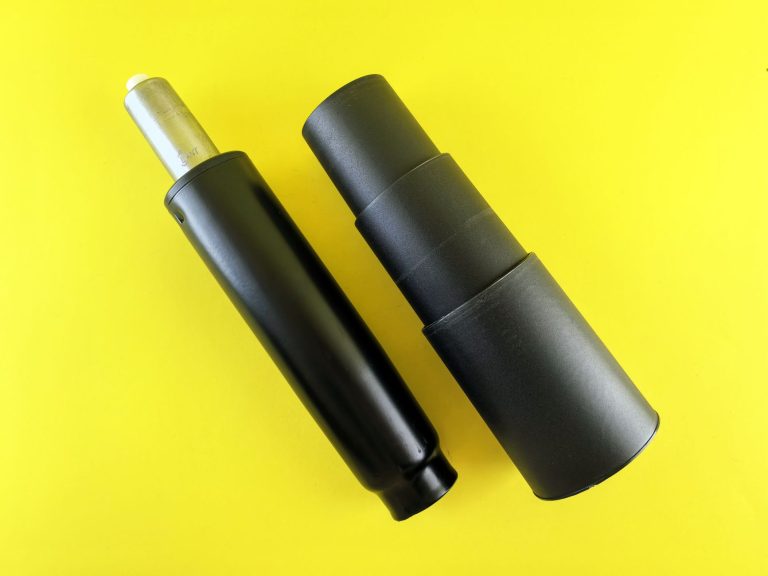
Spring installation is a safety-critical procedure whether you are handling gas struts for automotive hatches or heavy-duty mechanical springs for industrial machinery. You must verify that the spring rating matches your load specifications exactly. Never attempt to manually compress a spring that is meant for a machine-press installation without appropriate jigs.
During installation, ensure your hands remain clear of the pivot path. A gas spring that misfires during fitting can release 500N of force in milliseconds. Always consult the manufacturer’s specific datasheet regarding the orientation of the rod, as internal seals depend on precise positioning for longevity.
⚡ In a Rush? Key Takeaways
- Always verify your gas strut Newton force before installing to avoid equipment damage.
- Replace gas springs in pairs to ensure even load distribution across 50,000+ cycles.
- Mount rod-end down for standard gas springs to maintain internal seal lubrication.
- Standardize your installation with professional force calculator tools for accuracy.
What are the critical steps for mounting gas springs?
Mounting gas springs requires correct orientation, where the rod end faces down to keep internal seals lubricated and functional long-term.
Most standard industrial gas springs must be mounted with the piston rod pointing downward when the unit is in the closed position. This ensures the hydraulic oil remains in contact with the seal. If you mount them rod-up, the seal will eventually dry out, leading to a catastrophic loss of nitrogen pressure.
Alignment is equally critical. Even a 5-degree misalignment can cause side-loading on the rod, which pits the chrome finish. Once the chrome is damaged, the seal will tear, and the strut will lose its pressure within weeks of deployment.
Why should I replace gas springs in pairs?
Replacing gas springs in pairs prevents uneven load stress that causes premature failure of the mechanism and potential equipment damage.
If you have one failed spring, its partner has likely endured the same cycle count and environmental exposure. Placing a new 300N spring alongside an old, weakened 150N spring creates an imbalanced torque on the lid hinges. This imbalance often leads to warped mounting brackets or cracked cabinet carcasses.
- Check for identical Newton ratings on both replacement units.
- Ensure both struts share the same extension length to match original travel.
- Verify that the mounting measurements remain consistent with the original design.
- Test the closing force to ensure the pair does not exceed load limits.
How do I troubleshoot common spring installation errors?
Troubleshoot installation errors by checking for incorrect mounting orientation, insufficient clearance, or mismatched force ratings in the system.
What does a “weak” gas spring feel like upon installation?
A weak gas spring feels unresponsive, allowing the lid to drop rapidly rather than holding it securely in the open position during operation.
If your lid drops immediately after installation, you have likely underestimated the required Newton force. This often happens if you calculated the weight but forgot to account for the pivot angle. You can use an online force calculator to determine if your current strut is actually capable of supporting your specific application geometry.
How can I verify if the mounting geometry is correct?
Verify mounting geometry by ensuring the spring has enough stroke to cover the full travel distance of the hatch without binding or bottoming.
The arc of travel for your lid must not exceed the physical extension limits of the strut. If the spring “bottoms out,” it will act as a physical stop and put extreme stress on the hinges. Ensure you have 5-10mm of reserve stroke remaining when the lid is at its maximum open position.
What are the FAQ regarding spring installation?
Common installation FAQs cover orientation, cycle life, force adjustments, and the necessity of using matched pairs for optimal performance.
Can I adjust the force of my spring after installing it?
Most industrial gas springs are non-adjustable; if you require a different force, you must source a new unit with the correct specification.
How do I know if the spring is “bottoming out”?
You can identify bottoming out if the lid hits a firm stop before the gas spring finishes its full, damped extension range during opening.
Are there different guides for stainless steel springs?
Stainless steel springs follow the same installation logic, but require higher torque settings to avoid galling of the thread during mounting.
What additional considerations apply to mechanical coil springs?
Mechanical coil springs require proper compression tools, correct preload, and attention to end conditions to avoid sudden release.
Unlike gas springs, mechanical coil springs store energy purely through elastic deformation. Installation often calls for a spring compressor to safely manage the stored energy while you fit retaining clips, bolts, or seats. Always verify the spring’s free length, rate, and preload match the design specifications before compressing.
After installation, check that the spring sits squarely in its seat and that any seat surfaces are clean and free of burrs. Mis‑aligned seating can cause uneven load, leading to premature coil binding or fracture. Use a torque wrench to fasten retaining hardware to the manufacturer’s spec, and perform a final functional test by cycling the mechanism through its full range to confirm smooth operation.