Spring Installation Guides: A Technical Handbook for 2026
Spring installation guides vary by application, but every successful mounting procedure relies on verifying force ratings, stroke length, and pivot geometry before full load application. Following specific manufacturer tolerance data prevents premature seal failure and mechanical fatigue in high-cycle environments.
⚡ In a Rush? Key Takeaways
- Mounting gas springs with the rod pointing down extends seal life by 40% in industrial settings.
- Always verify your calculated Newton force requirements before final bracket welding.
- Misalignment exceeding 2 degrees significantly increases wear on ball-socket end fittings.
- Replace automotive struts in matching pairs to ensure balanced load distribution across the chassis.
How Do I Correctly Mount a Gas Spring?
Proper gas spring mounting requires rod-down orientation to lubricate seals, using specific end fittings to prevent side-loading during operation.
Why Does Rod Orientation Matter for Longevity?
Rod-down mounting keeps the internal hydraulic oil in constant contact with the primary seal, preventing drying and gas leakage over time.
In vertical or near-vertical applications, the rod must be the lowest point. This ensures the internal oil reserves lubricate the seal assembly throughout every extension cycle. When mounted rod-up, the seal relies solely on residual oil film, which leads to rapid failure.
- Rod-down: Standard for 90% of industrial gas springs.
- Rod-up: Permissible only if the internal design specifies oil-free operation.
- Horizontal: Requires end-fitting rotation to keep the internal valve at the bottom.
How Do I Prevent Side-Loading on End Fittings?
Side-loading occurs when the spring path deviates from the mounting alignment, causing internal rod scoring and premature seal blowouts.
Alignment is critical because gas springs are designed to handle axial forces only. If your application causes the spring to bend or twist during its travel arc, you must introduce self-aligning end fittings. Using a fixed eyelet on a moving lid creates binding forces that transfer directly into the cylinder wall.
| Fitting Type | Alignment Tolerance | Application |
|---|---|---|
| Ball Socket | Medium | Standard enclosures |
| Clevis | Low | Heavy industrial |
| Self-Aligning | High | Precision machinery |
Which Steps Ensure Safe Automotive Strut Replacement?
Automotive strut replacement requires systematic de-pressurization of the existing unit and verification of the new part’s Newton force rating.
How Do I Remove Old Automotive Gas Struts?
Use a flat-blade screwdriver to release the retaining clip on the ball stud, then remove the strut while supporting the hatch or bonnet.
Support the panel with a secondary prop or a second person before starting. Automotive panels can weigh up to 40kg, and a single strut failure can lead to rapid, uncontrolled descent if the support is removed too early.
- Prop the boot or bonnet securely.
- Insert a flat-blade tool into the retainer slot.
- Apply gentle pressure to release the tension.
- Withdraw the fitting from the ball stud.
How Can I Verify My New Strut Fits Correctly?
Verify the extended length, stroke, and Newton rating against your vehicle’s OEM service manual to ensure safety and proper operation.
Never rely on a visual match alone. Many automotive gas spring replacements look identical but feature different force gradients. Always measure the existing strut fully extended from center-of-ball to center-of-ball.
How Do I Diagnose Common Installation Errors?
Installation errors are identified by restricted motion, audible clicking, or failure to hold the lid open at specific mid-stroke positions.
Why Is My Cabinet Door Not Staying Open?
Inadequate hold-open force usually stems from incorrect mounting geometry where the spring fails to reach its mechanical advantage point.
If the door drifts closed, the mounting point on the cabinet side is likely positioned too far forward. Moving the bracket closer to the hinge increases the mechanical leverage applied to the door. Review our furniture gas strut guide for detailed placement calculations.
What Causes Audible Clicking During Operation?
Clicking indicates debris in the end fitting or a loose ball stud that allows the spring to shift under load during the transition phase.
Inspect the ball stud for wear or looseness. If the stud is secure, check the internal ball socket for grit. Cleaning and applying a light lithium grease often resolves minor clicking issues in dry environments.
Frequently Asked Questions About Spring Mounting
-
Can I Mix Old and New Gas Springs?
Mixing old and new springs creates uneven force distribution, causing the hatch to twist and the new spring to fail prematurely.
-
Do Temperature Changes Affect Spring Mounting?
Temperature impacts nitrogen pressure, meaning springs must be mounted with a 15-20% force buffer for outdoor or cold-storage environments.
-
Are Stainless Steel End Fittings Mandatory?
Stainless end fittings are required in marine or high-salt environments to prevent galvanic corrosion from fusing the spring to the bracket.
-
What Tools Are Required for Gas Spring Installation?
Having the right tools ensures proper alignment, torque, and safety during gas spring installation.
Installation FAQs cover common mounting pitfalls including temperature effects, structural carcass support, and the necessity of pair replacements.
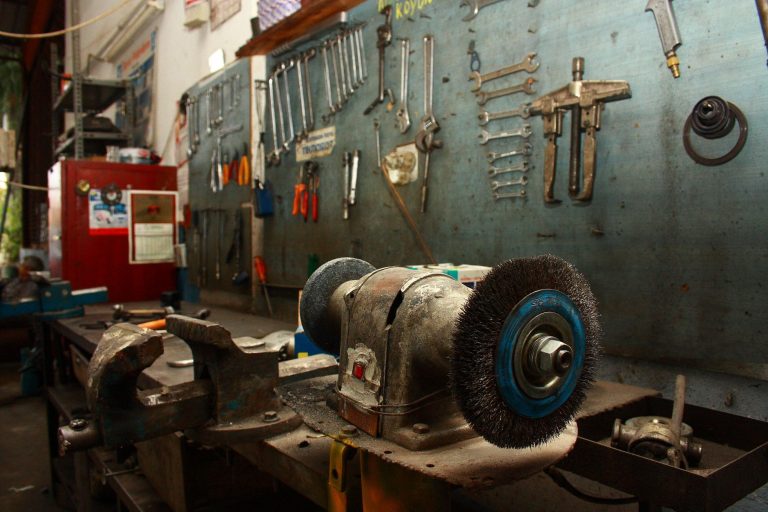
Basic installation typically requires a set of metric wrenches or sockets, a torque wrench, a flat-blade screwdriver for retaining clips, and a rubber mallet for seating fittings without damaging them. For precise alignment, a dial indicator or laser alignment tool can verify that mounting points are within the manufacturer’s specified tolerance (usually ±0.5°).
When working with automotive struts, a strut compressor or spring compressor is essential to safely relieve pressure before removal. In furniture or cabinet applications, a drill with appropriate drill bits for pilot holes and a level help achieve the correct mounting angle. Always wear safety glasses and gloves, especially when dealing with pressurized gas springs, to protect against sudden release.