Spring Fatigue Testing: Methods and Industrial Standards for 2026
What Is Spring Fatigue Testing and Why Is It Necessary?
Spring fatigue testing applies repeated stress cycles to determine the operational lifespan of a spring before permanent failure occurs.
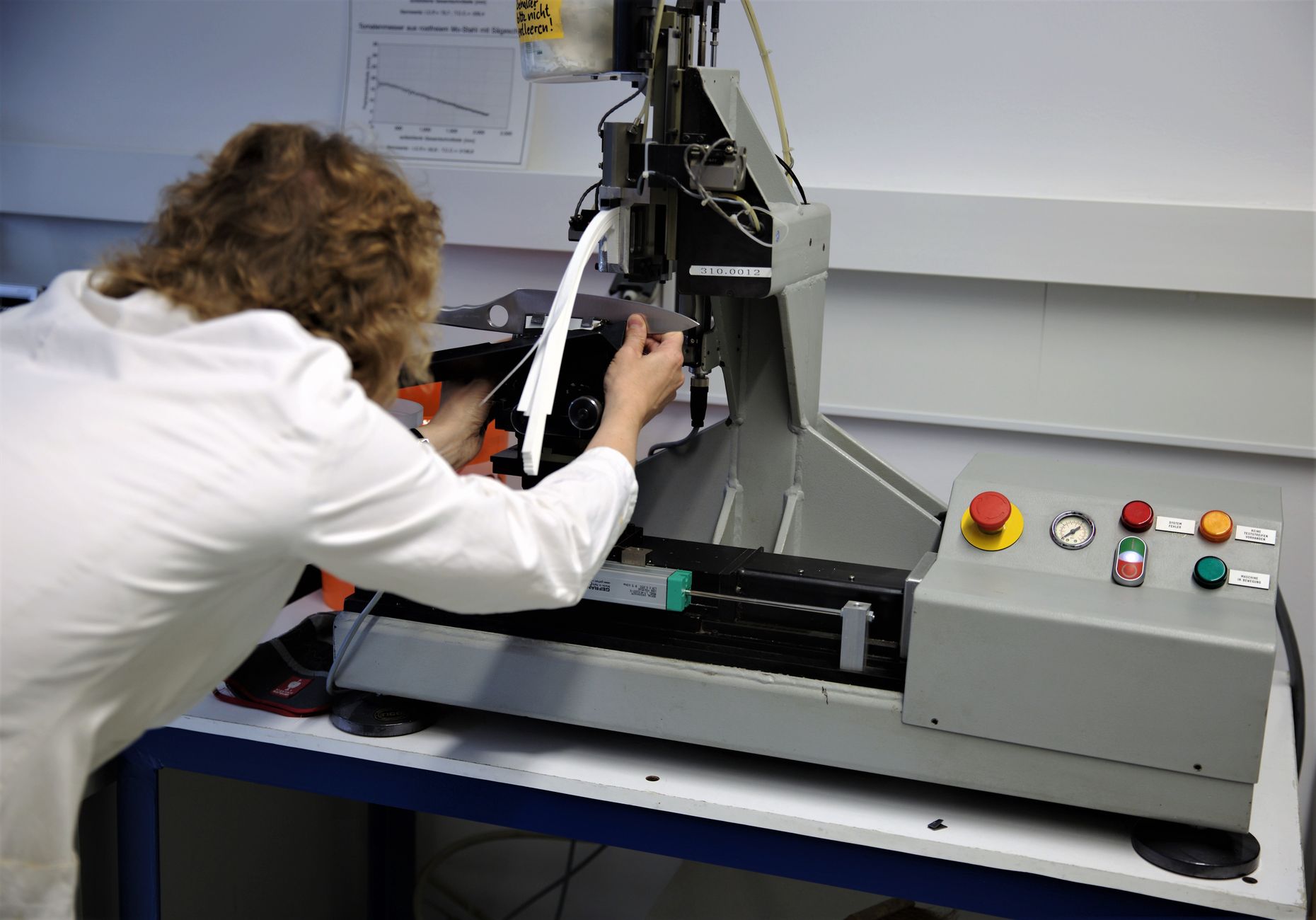
Fatigue testing is the systematic process of subjecting a spring to cyclic loading to simulate its entire operational lifespan in a controlled laboratory setting. By replicating the stress amplitudes the component will encounter in real-world machinery, we can predict exactly when the material will reach its endurance limit. For critical industrial applications, this testing provides the only reliable baseline for maintenance schedules.
⚡ In a Rush? Key Takeaways
- Standard industrial springs are typically fatigue tested to 50,000–100,000 cycles minimum.
- Testing determines the endurance limit, where material stress stays below critical failure points.
- Operating outside the designed stress range can reduce fatigue life by 40% or more.
- ✅ Always verify cycle-life ratings for high-frequency industrial machinery before procurement.
How Does Cyclic Loading Affect Spring Material Integrity?
Cyclic loading causes microscopic cracks in spring wire that propagate over thousands of stress reversals, eventually leading to breakage.
When a spring compresses and extends, the internal stress distribution changes continuously. If the maximum stress exceeds the material’s fatigue limit, small surface imperfections or grain boundaries begin to act as stress concentrators. These concentration points initiate micro-cracks that grow larger with every single stroke.
- Surface finish quality: Rougher wires initiate cracks significantly faster.
- Operating temperature: High heat accelerates relaxation and crack propagation.
- Stress range: Large differences between free height and solid height increase damage.
- Corrosion: Surface pits create localized stress points that reduce life by 70%.
Surface Enhancement Techniques to Improve Fatigue Life
Processes such as shot peening, nitriding, and polymer coatings introduce compressive residual stresses that inhibit crack initiation and extend fatigue life.
Shot peening bombards the spring surface with small spherical media, creating a layer of compressive stress that counteracts tensile stresses during cycling. This treatment can increase fatigue life by 20‑50% depending on material and peening intensity.
Other techniques include nitriding, which diffuses nitrogen into the surface to harden it, and application of thin polymer or ceramic coatings that protect against corrosion and reduce surface roughness. When combined with proper stress‑range design, these methods allow springs to meet higher cycle requirements without increasing wire diameter.
What Are the Core Objectives of Fatigue Life Analysis?
Fatigue analysis aims to establish a safe working stress range that prevents mechanical failure during the full design life cycle.
We perform this testing to validate theoretical design calculations against physical performance. In my experience, even the best finite element analysis (FEA) models require physical confirmation because material batch quality varies. The goal is to reach a target cycle count without signs of plastic deformation or fracture.
When Should You Specify Fatigue Testing for Components?
Fatigue testing is essential for high-frequency components, safety-critical access hatches, and machinery subject to constant vibration.
If a failure in your industrial machinery or access hatch poses a safety risk, fatigue testing is non-negotiable. I specify testing for any spring operating above 10 cycles per hour. For gas springs or mechanical coils, early testing prevents costly downtime.
Which Industrial Standards Govern Fatigue Testing?
Major standards for fatigue testing include ISO 10243 for die springs and various ASTM specifications for raw spring wire materials.
How Do ASTM Standards Define Fatigue Test Parameters?
ASTM standards provide uniform protocols for sample preparation, stress calculation, and equipment calibration to ensure global results.
ASTM F913 and similar specifications dictate how we monitor load-loss during the test. A spring is considered to have failed if it loses more than 5% of its original rate or height. This data is critical when evaluating automotive components that must maintain performance under strict OEM requirements.
What Is the Role of ISO 10243 in Die Spring Testing?
ISO 10243 establishes specific color-coded stress and life expectancy targets for high-performance rectangular wire die springs.
| Spring Color | Typical Life Expectancy | Application Stress |
|---|---|---|
| Green (Light) | 1,000,000 cycles | Low |
| Blue (Medium) | 500,000 cycles | Moderate |
| Red (Heavy) | 250,000 cycles | High |
Why Do Manufacturers Use Statistical Analysis in Reports?
Statistical analysis uses Weibull distribution to predict failure probabilities across entire batches rather than single samples.
We rarely test just one spring. Testing 30 or more samples allows us to generate a probability curve, ensuring that 99% of a production run meets the minimum cycle requirement. This rigorous approach is how we confirm reliability in large-scale industrial assemblies.
Frequently Asked Questions About Spring Testing
-
Can a spring be tested to failure in the field?
Field testing is unreliable because environmental factors like dust and humidity cannot be controlled, making cycle data inaccurate.
-
Does cold temperature affect fatigue test results?
Yes, low temperatures increase material brittleness, which can reduce the fatigue life of standard carbon steel springs significantly.
-
How can I verify if my spring is fatigue-rated?
Request a certificate of conformance or a technical datasheet that explicitly mentions the tested cycle life and ASTM standard.
-
Is cycle life the same as shelf life?
No, cycle life refers to operational stress reversals, while shelf life refers to potential material degradation in storage.
Conclusion
Fatigue testing remains the most reliable method for predicting the performance of mechanical springs in demanding environments. By adhering to ASTM and ISO standards, engineers ensure that components deliver the required 100,000+ cycle life. Always prioritise parts that come with verified test data over generic stock to maintain industrial safety and operational uptime.